Confused symbolic interaction of schizophrenics in a psychiatric hospital in Indonesia: Digital culture for an inclusive environment and organized communication

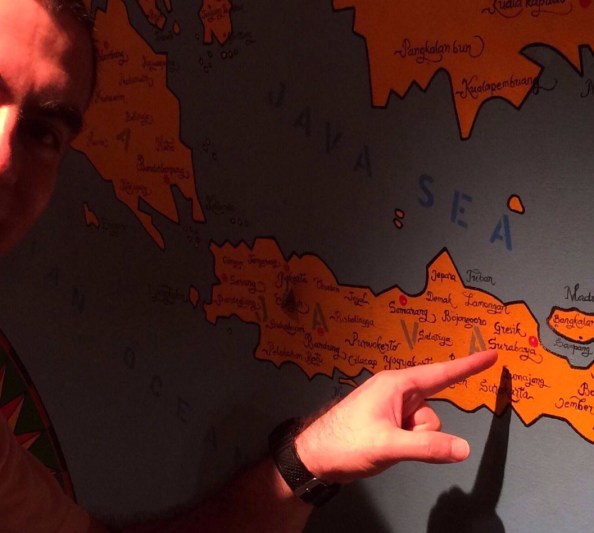
img_2166

Surabaya, Indonesia ((Sabá, 2016)

Authors:
Hadi SABA AYON, Erlyn ERAWAN, Michael RAHARDANTO, Jaka SANTOSA SUDAGIJONO.

The social stigma of persons suffering from mental disorders is still prevalent in Indonesia. People are often embarrassed to go to psychologists or psychiatrists due to fear of being labeled as “crazy”. Disorganization characterizes the behavior of schizophrenics. Often, people blame “spirit possession” as the cause of an apparent behavior disturbance. As their personalities and capacities to achieve daily tasks are affected, they become dependent of their assistant environment to achieve their life habits (Fougeyrollas et al., 1998). How could digital environment (Doueihi, 2013) help them restructure their behavior and promote social participation? We interviewed assistants of schizophrenic patients in a psychiatric hospital in Lawang in Indonesia on October of 2016. This survey shed light on the perception from healthcare providers of mental disorders, and their understanding of digital and social participation. The content analysis of the interviews showed that the understanding of the problem of mental disorders is limited to difficulties the patients face in social interaction and communication. Moreover, patients lack the support of the social environment, who could help them overcome their sufferings. As for digital, it boosts the patient’s capacity to communicate and express oneself. On the other hand, it carries the risk of addictions and laziness. We call for a transliteracy for users to enhance their abilities in communication but also in treatment of digital information (to search, to organize, to share). We suggest a digital activity based on creating and developing an inclusive digital environment. This construction passes by producing and editorializing content (Vitali-Rosati, 2016) about their lives, their needs and their rights, then archiving these constructions (Crozat, 2016) in a collaborative memorial project. The aim is to attempt to organize information and communication of schizophrenic user by developing and practicing information and communication strategies to deal with the digital information and its structures.

* This text is a collective contribution born from an international cooperation with Faculty of Psychology in Widya Mandala Catholic University in Surabaya in Indonesia. It was presented in the 3rd International Congress of Health Communication in Madrid (Spain) on October 19th-20th of 2017.

To check the program of the congress: http://www.aecs.es/ICHC2017_programa.pdf
– Dr. Hadi SABA AYON, Ph.D. in information and communication sciences, is an affiliated researcher to Faculty of Psychology in Widya Mandala Catholic University Surabaya in Indonesia.
Email: s.a.hadi@sabaeu.com
– Erlyn ERAWAN, Psy. D., is a researcher and lecturer in Faculty of Psychology in Widya Mandala Catholic University Surabaya in Indonesia.
Email: erlynerawan2@gmail.com
– Michael RAHARDANTO, M.A., is a researcher and lecturer in Faculty of Psychology in Widya Mandala Catholic University Surabaya in Indonesia.
Email: michaelrahardanto@gmail.com
– Jaka SANTOSA SUDAGIJONO, Masters, is psychologist, researcher and lecturer in Faculty of Psychology in Widya Mandala Catholic University Surabaya in Indonesia.
Email: jaka_s@ukwms.ac.id

Ma première rencontre avec ALTER

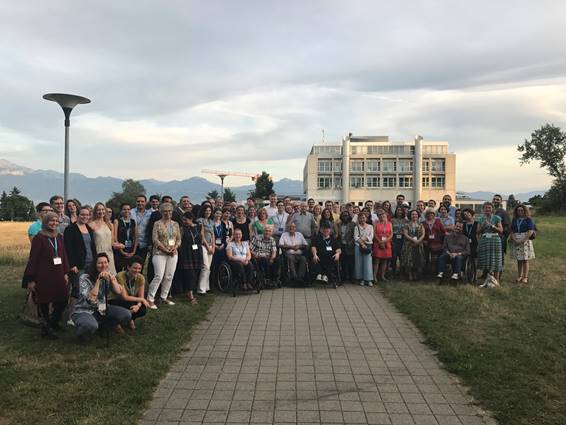
Alter pic collective

Alter 2017, Lausanne (Switzerland).


La rencontre avec Alter, Société Européenne de Recherche sur le Handicap s’est tenue à Lausanne en Suisse dans le cadre d’une Conférence internationale qu’elle a organisé sur le handicap, la reconnaissance et le “vivre ensemble”.

Cette éditorialisation décrit des moments de la rencontre, des présentations scientifiques et des échanges académiques et humains :

https://storify.com/Esmera/ma-premiere-rencontre-avec-alter

Ma première rencontre avec ALTER-Storify-Lausanne, juillet 2017


Clubhouse connecté pour la population ayant des incapacités psychiques : pratiques numériques collaboratives, emplois de transition & communs de la connaissance

pic-2

   Le modèle du clubhouse connecté que nous proposons dans cette présentation consiste à mettre en place une éducation au numérique, une première condition pour la “participation sociale en réseau” (Saba Ayon, 2016). Conçu pour une population ayant des incapacités psychiques, le clubhouse la connecte à l’environnement numérique qui modifie instantanément l’espace urbain et les pratiques de vivre dans la ville. L’objectif est de développer une présence numérique (Merzeau, 2010) qui favorise une bonne communication et une activité collaborative et participative. Face à une traçabilité numérique exploitée par les grandes firmes pour profiler les usagers, le numérique, dans une approche culturelle (Doueihi, 2013), devrait être investi dans des projets collectifs et mémoriaux pour faire des communs de connaissance (Mulot, 2016) utiles et efficaces à la personne et à sa communauté.

Ce travail a été présenté dans le cadre du Colloque International “Pour une ville inclusive : Innovations et partenariats”, organisé par le RIPPH et le CIRRIS à l’Université Laval à Québec les 08 et 09 novembre 2016.

Voir le support de la présentation : https://drive.google.com/open?id=0B0pzbHXvgDK8Tlg0QnZTS0YwNDA

Une vidéo de la présentation sera mise en ligne bientôt.