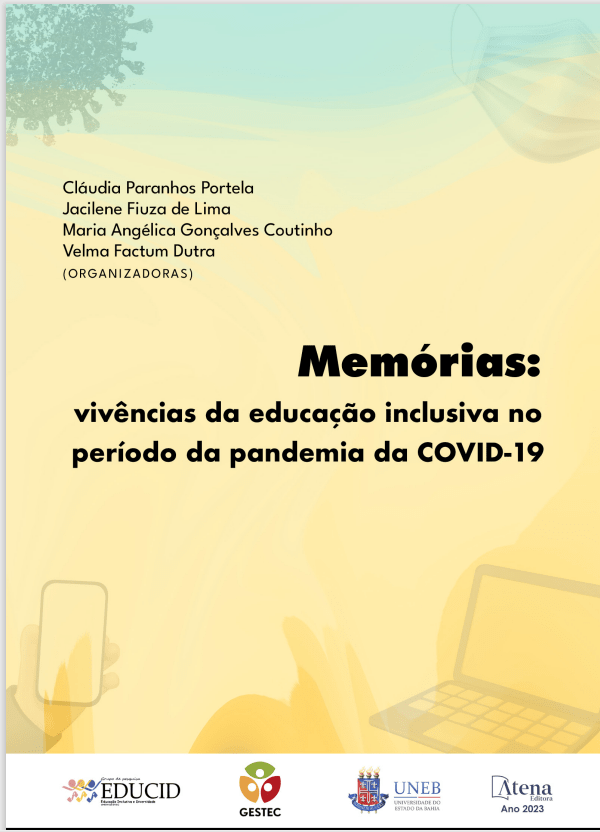
I had the pleasure to write in portuguese the Preface of the e-book Memórias: vivências da educação inclusiva no período da pandemia da Covid 19 directed by Professors Cláudia Paranhos De Jesus Portela, Jacilene Fiuza de Lima, Maria Angélica Goncalves Coutinho and Velma Factum Dutra from the University of Bahia State in Brazil (UNEB).
The preface is untitled: “RETOMAR OS RASTROS DIGITAIS PARA FAZER MEMÓRIA E FAVORECER A PARTICIPAÇÃO SOCIAL DE PESSOAS COM DEFICIÊNCIAS” (RECLAIM DIGITAL TRACES TO BUILD MEMORY AND PROMOTE THE SOCIAL PARTICIPATION OF DISABLED PEOPLE).
In the Preface I bring to the works on the culture of inclusion for disabled people a view about repossessing digital traces by building memories. I highlight on the digital traceability that characterizes our activities on the Internet. I emphasize the importance of developing digital skills and reinventing the digital space and the uses of the digital technology to help in achieving daily activities and social roles of disabled people. Finally, I call to produce and share digital cultural memories (conveying knowledge and good practices) that help to achieve life habits.
The e-book was published on October 2023 by Atena Publisher. It brings together scientific articles, letters from mothers and experience reports from various extension projects of the EDUCID research group at the University of Bahia State in Brazil, that were developed during the Covid-19 pandemic. EDUCID is the Special Education, Inclusion and Diversity Research Group linked to the Program of Management and Technology Applied to Education (GESTEC) at the State University of Bahia in Brazil.
The e-book gathers works that share theoretical and empirical experiences that transcended the home, isolation and social distancing, when collective life seemed to lose meaning and, at the same time, revealed the inexorable reason for human existence: community life.
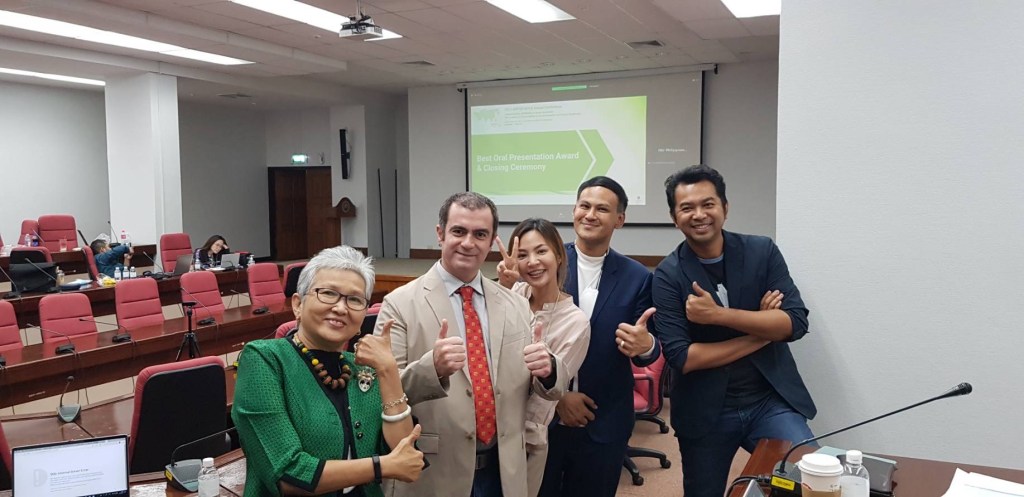
With Jantima Kheokao, ANPOR President, University of the Thai Chamber of Commerce, THAILAND.
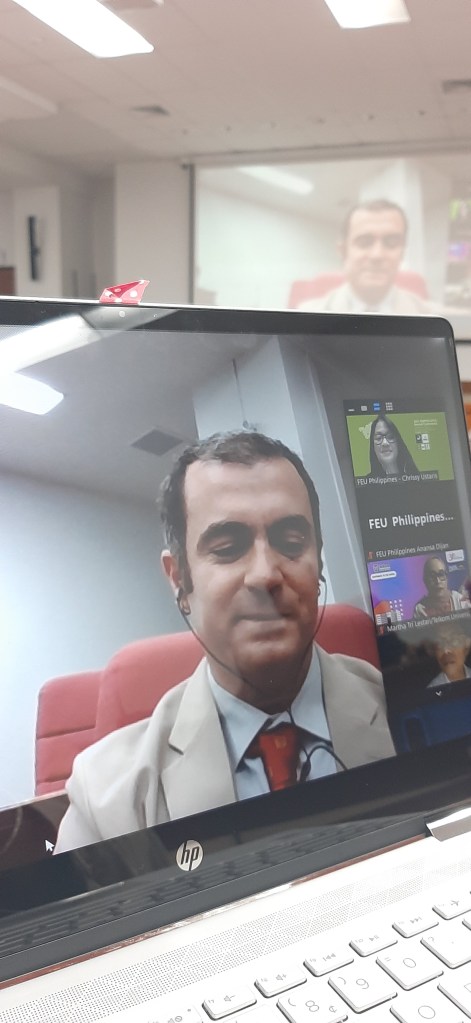
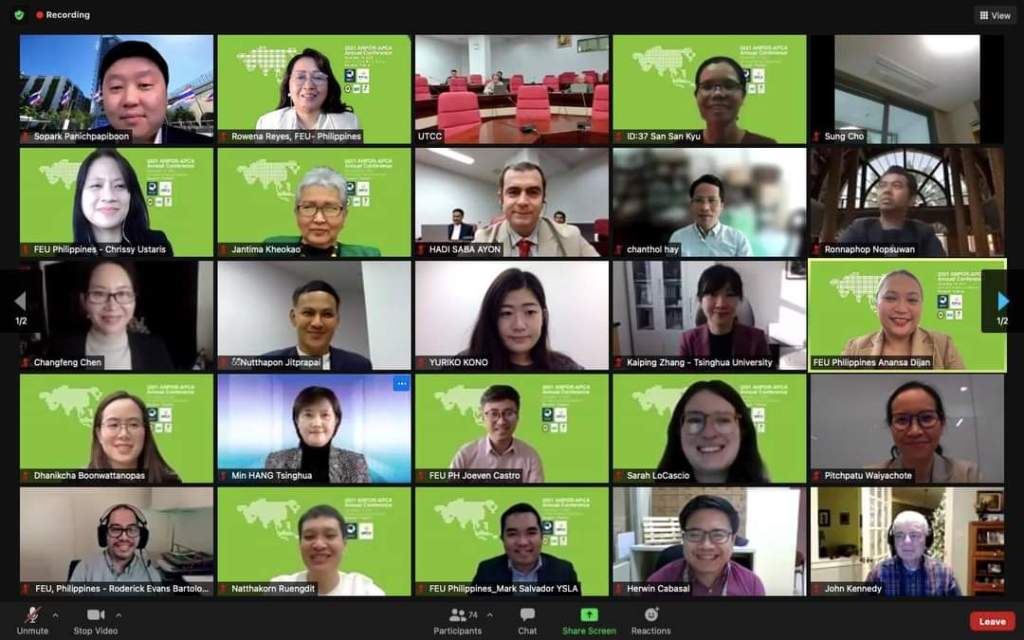
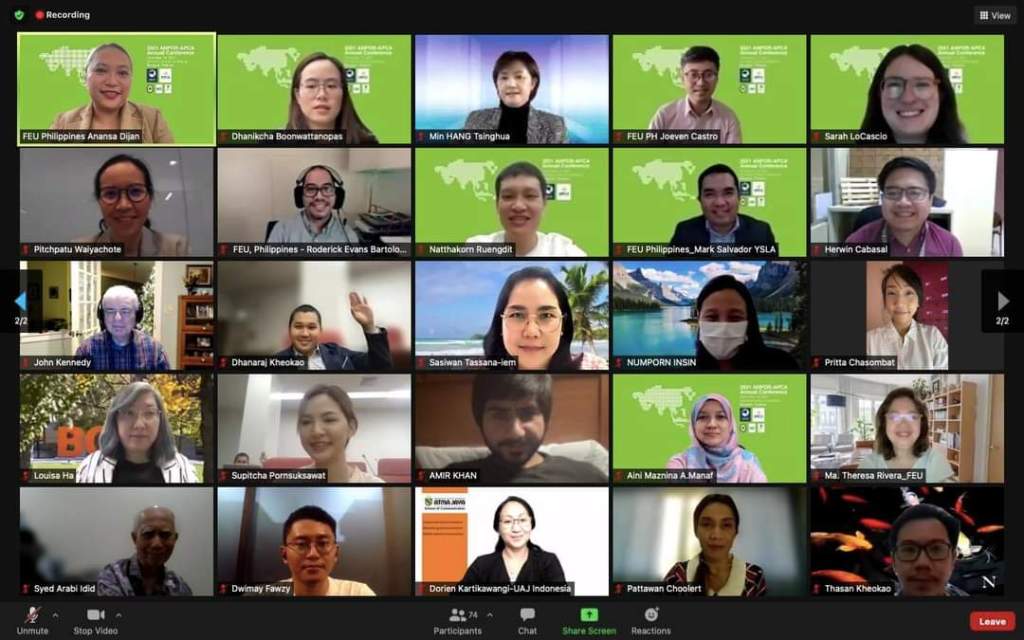
Le laboratoire de recherche UMR 6266 CNRS IDÉES a participé à la co-organisation et a facilité le déroulement de la conférence annuelle du Réseau Asiatique de Recherche sur l’Opinion Publique (ANPOR) qui s’est tenue mardi 14 décembre 2021, en ligne et sur site, à l’Université de Chambre de Commerce Thaïlandaise à Bangkok. La conférence a réunie 100 participants à travers le monde, et notamment des pays de l’Asie – Pacifique. La France a été représentée par l’Université Le Havre Normandie (Hadi Saba Ayon docteur en Sciences de l’information et de la communication et chercheur associé à l’UMR 6266 CNRS IDÉES et au e-laboratory on Human-trace Unitwin Complex Systems Digital Campus dirigé par Béatrice Galinon-Mélénec).
Dear colleagues, dear participants, I am very pleased to welcome you to my 3rd course on Pandemic, gestures and memory at School of Communication at Atma Jaya Catholic University of Indonesia. In this 3-day workshop, we will talk about communication, digital culture, and writing and we will also write together. Writing is at the center of these sessions. Because at the base of digital culture there is Information Technology (IT). And as computer science is the techno science of information processing by automatic machines, all computer programming supposes discretization and formalization, in a word, writing. Thereby digital communication cannot exist outside the writing frame as one cannot NOT leave traces in digital environments. What are these traces and how can we distinguish a trace from an imprint from a sign? What are the challenges that digital traceability brings? What are the changes that Covid-19 pandemic brought to communication and what is its impact on digital transformation? In digital culture, there is the word “culture” that we will approach also in this work. In his Book Beyond Culture (1976), Edward T. Hall describes culture as models, templates; as the medium we live in; it is innate but learned; it is living, interlocking systems; it is shared, created and maintained through relationship; and it is used to differentiate one group from another.
Is it right to call digital a culture? If yes why? This will be one question among others that we will comment on the discussion online board (https://board.net/, from Fairkom) that you’ll find its link in the chat box. We will have other content to review and discuss during the course, and you’re welcome to transform your interaction into participation. We will try together to specify how to participate in online culture and what are the factors to take into account? The course, based on French and American works in different fields, emphasizes the importance of gestures in interpersonal communication, affected by Covid-19 pandemic and its consequences on human relationships. It exposes classic works from Chicago and Palo alto schools (20th century) and refers to recent reflections on Internet and digital culture given by Milad Doueihi [American-Lebanese historian of religions], Dominique Cardon [French sociologist], Louise Merzeau [Information and communication sciences – French school on Trace, who passed away on 2017 and I had the honor to work with her during my masters in Paris and my PhD in Le Havre in Normandy], Henry Jenkins [American media scholar], and others.
It approaches various notions that we use while talking about digital, as “trans-literacy” described by Merzeau (2014), and it forms to evaluate the information and the digital identity, and to learn how to filter and manage the digital presence. We will talk also about the post-human, described by Doueihi (2011) as “a consequence of the digital age, for it represents the ultimate expression of the new civilization inaugurated by the digital”. The post-human is, normally, a reference to the convergence of machine and man, to the possibility of intersection, within the body, of mind and computer. He stands as the perfect incarnation of the new individual generated by what Doueihi calls “the religious dimension of digital culture”.
With the growing engagement with the digital environment, the post-human is producing and exchanging more data, and ultimately is becoming a data consumer, a “human-data”. How to manage this data? Does it need to be preserved? Archived? One of the most neglected or forgotten aspects of digital culture is the impermanence or fragility of information and its material support.
This leads us to question how to deal with the accumulation of digital traces and their use for diverse purposes by different actors. Moreover, it takes us to question their availability, accessibility, security, and preservation. What happens to our traces? Are they saved and accessible anytime? Who owns them? Are they private or public? Could we delete some and keep others? Is Internet a universal memory? Digital traceability pushes us to question the memory and its characteristics in the digital era.
We will write together to participate and to build a digital memory that has its own properties and conditions, its governance, its rules and purpose; a network based memory connecting non-homogeneous memories and creating a digital community which brings together collective works that their authors / participants believe their contributions matter, and feel some degree of social connection with one another.
And as Henry Jenkins (2006) says: “Not every member must contribute, but all must believe they are free to contribute when ready and that what they contribute will be appropriately valued”. Thank you for your appreciated participation and let’s write together.
📢 DIGITAL COMMUNICATION COURSE 📢
The first course, "Pandemic, social participation and well-being," and the second course, "Disability: communication and social participation," were done successfully with an interactive discussion. pic.twitter.com/IDFULJ6Jel

 Sabáeu
You must be logged in to post a comment.