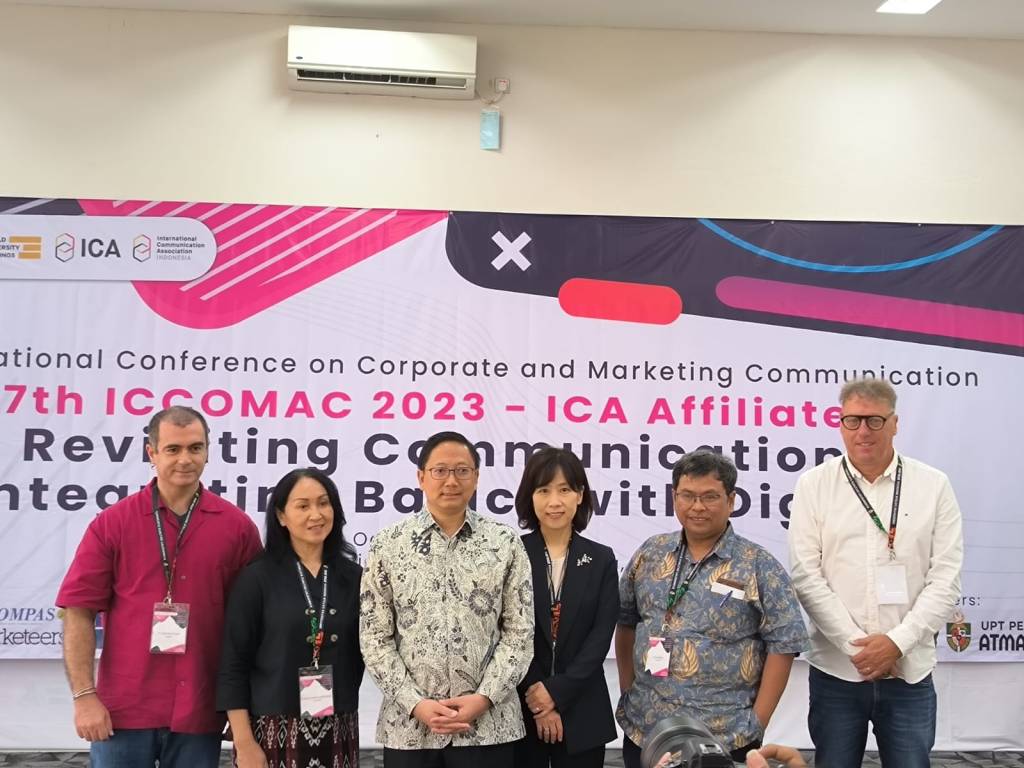
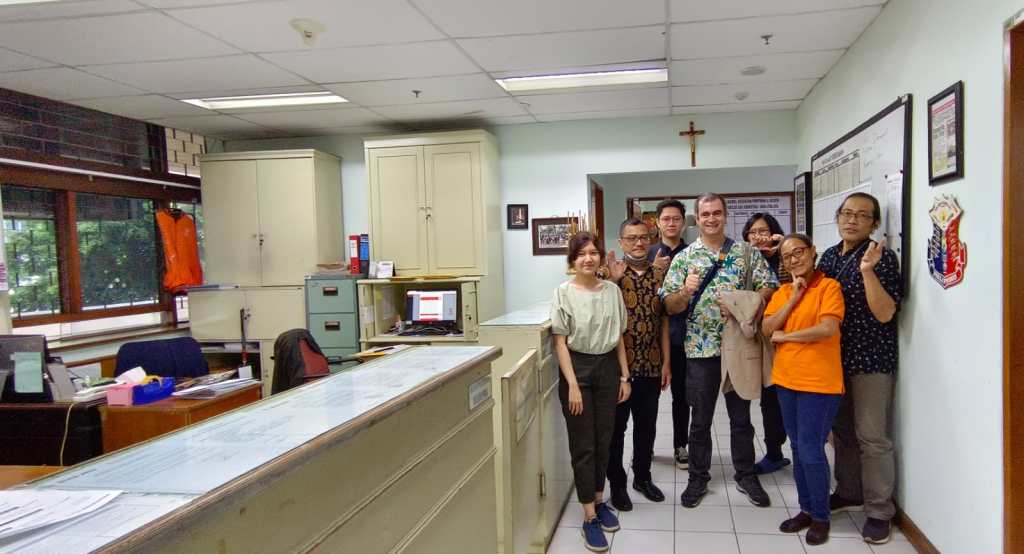
After years of international collaboration with the School of Communication, Atma Jaya became my HOME in Indonesia, and FIABIKOM my betawi family. My visit to Atma Jaya this year started with the 7th International conference on corporate and marketing communication (ICCOMAC) during which my friend Fabien Liénard, the chief of our research unit (IDEES Le Havre) at Université Le Havre Normandie was a speaker.
I also had pleasant and enriching discussions with students and scholars with whom I debated digital issues, multiculturalism and my educational and social life trajectories.
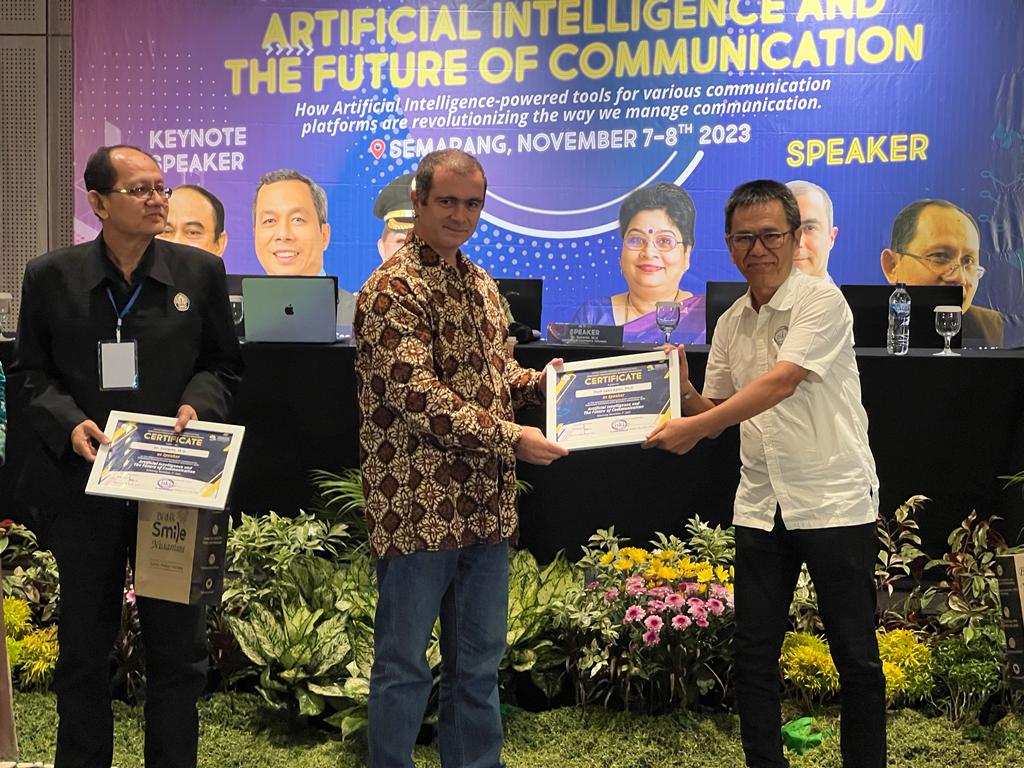
My stay at Atma Jaya was also an apportunity to participate in other activities with the Indonesian communication community: a conference on “Artificial intelligence and the future of communication” organized by the indonesian association of communication researchers (ISKI) in Semarang; a lecture on “The Internet as a crisis communication” at the Faculty of Social and Political Sciences at Universitas Indonesia; and a general lecture on “Communication, diversity and disability in cultural perspective” at Al Azhar University.
I was very glad to finish my mission with success and prepare new projects for the next year with colleagues that I learned to appreciate more and more. Yesterday FIABIKOM surprised me with a video that they produced to thank me. It touched me deeply and drew my attention to the fact that I had in Indonesia a pied-à-terre. Thank you FIABIKOM, thank you Atma Jaya. We still have a long and fruitful way to trace and walk.
Avec Pr. Fabien Liénard, directeur de IDEES Le Havre et Sophie Havard, responsable administrative à IDEES Le Havre.
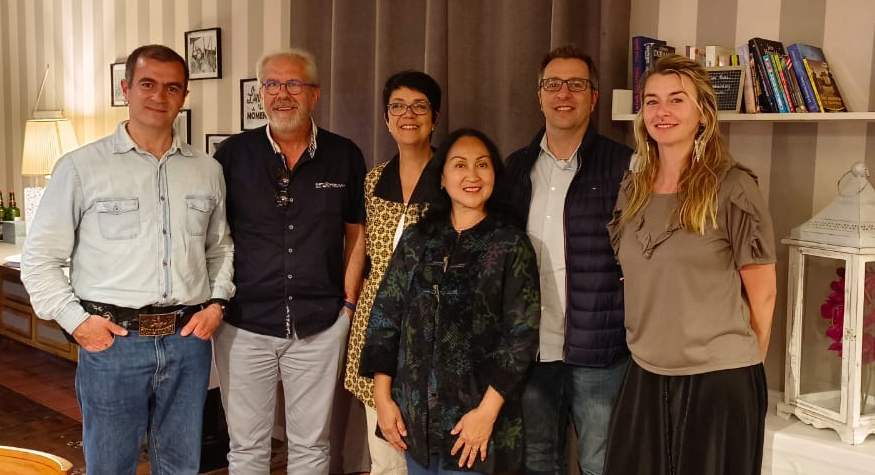
Avec Sandrine Danger-Pujol, directrice du service universitaire des relations internationales (SRI) et Elisabeth Robert-Barzman, directrice de l’UFR Lettres et sciences humaines.
Avec
Thierry Tabellion, directeur adjoint du Service Internationalisation de l’IUT du Havre ; Karine Delforge, professeure d’anglais à l’IUT ; Fabien Liénard, directeur de IDEES Le Havre et Hélène Le Roux, responsable de la gestion de la mobilité sortante hors Europe au SRI.
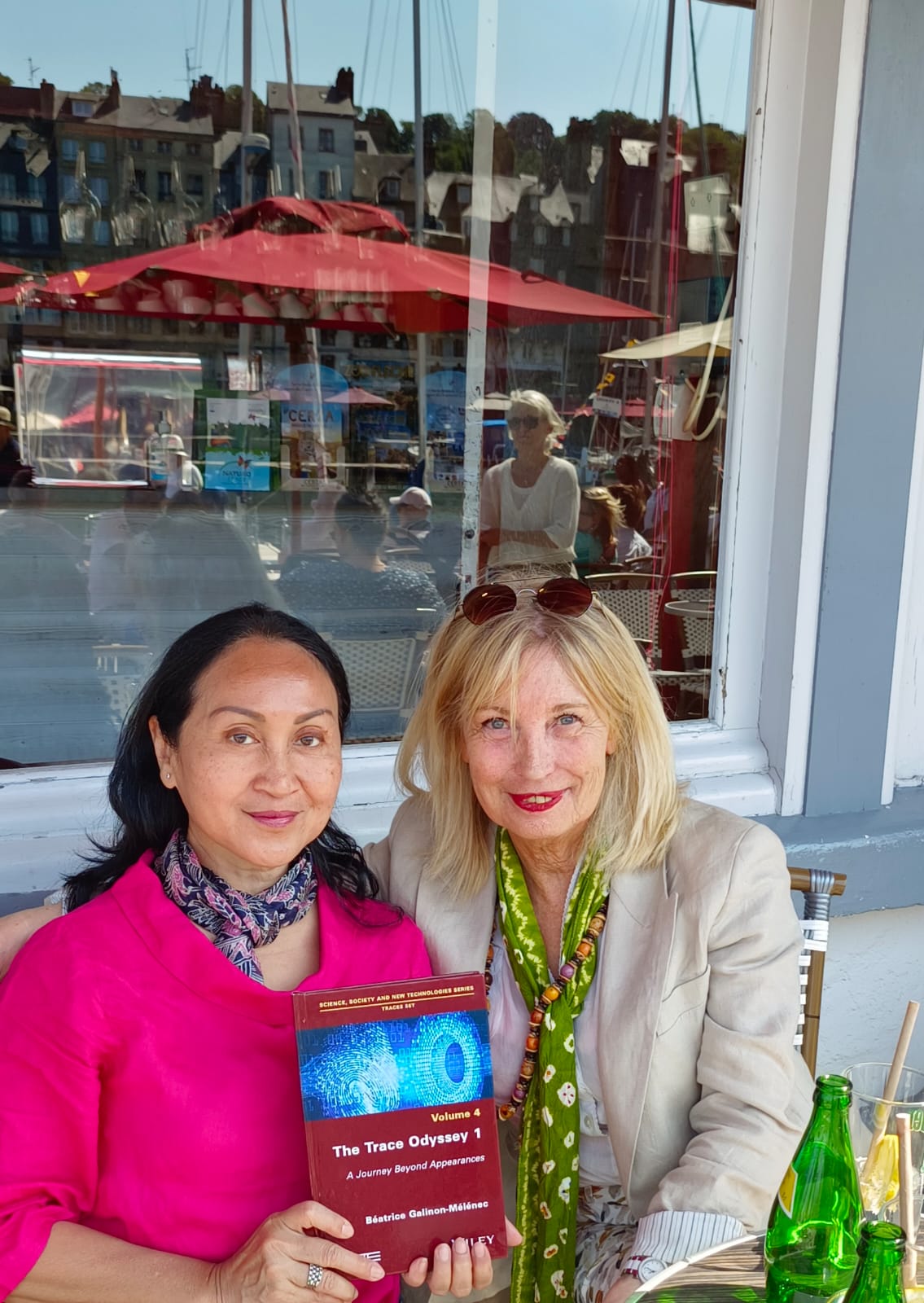
Avec Béatrice Galinon-Mélénec, Professeure émérite en SIC et fondatrice des paradigmes de l’Homme-trace (Ichnos-anthropos ) et des signes-traces.
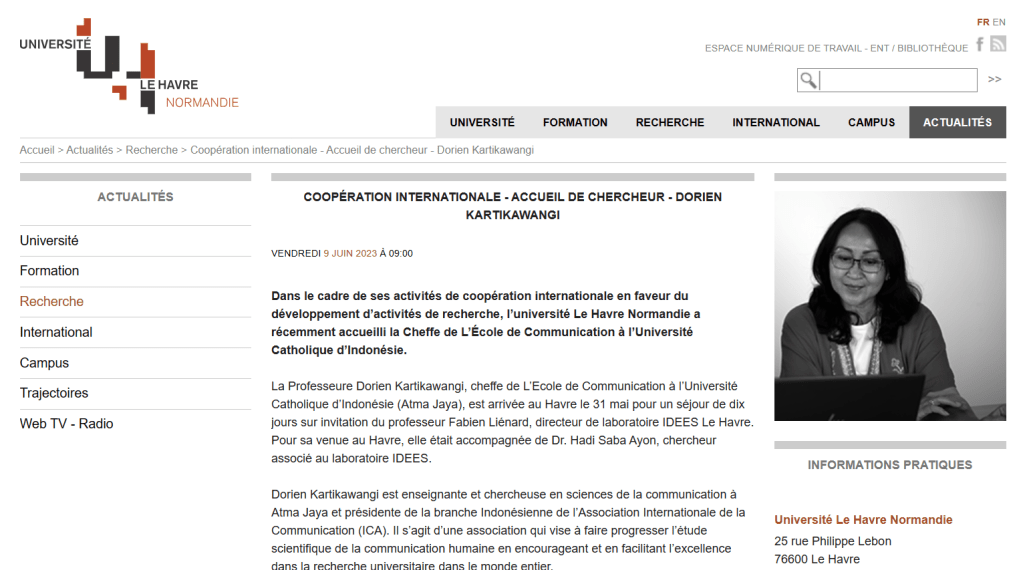
La Professeure Dorien Kartikawangi, cheffe de L’Ecole de Communication à l’Université Catholique d’Indonésie (Atma Jaya), est arrivée au Havre le 31 mai pour un séjour de dix jours sur invitation du professeur Fabien Liénard, directeur de laboratoire IDEES Le Havre. Pour sa venue au Havre, elle était accompagnée de Dr. Hadi Saba Ayon, chercheur associé au laboratoire IDEES
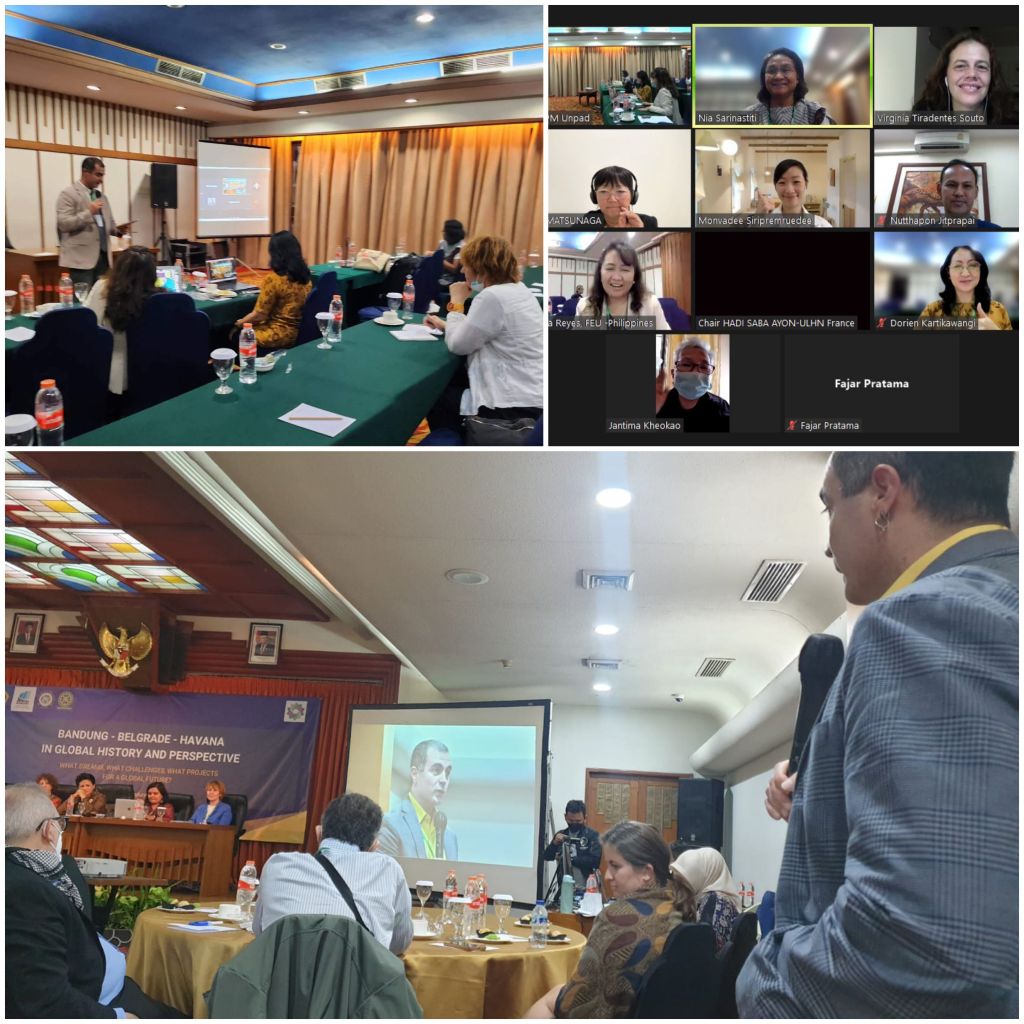
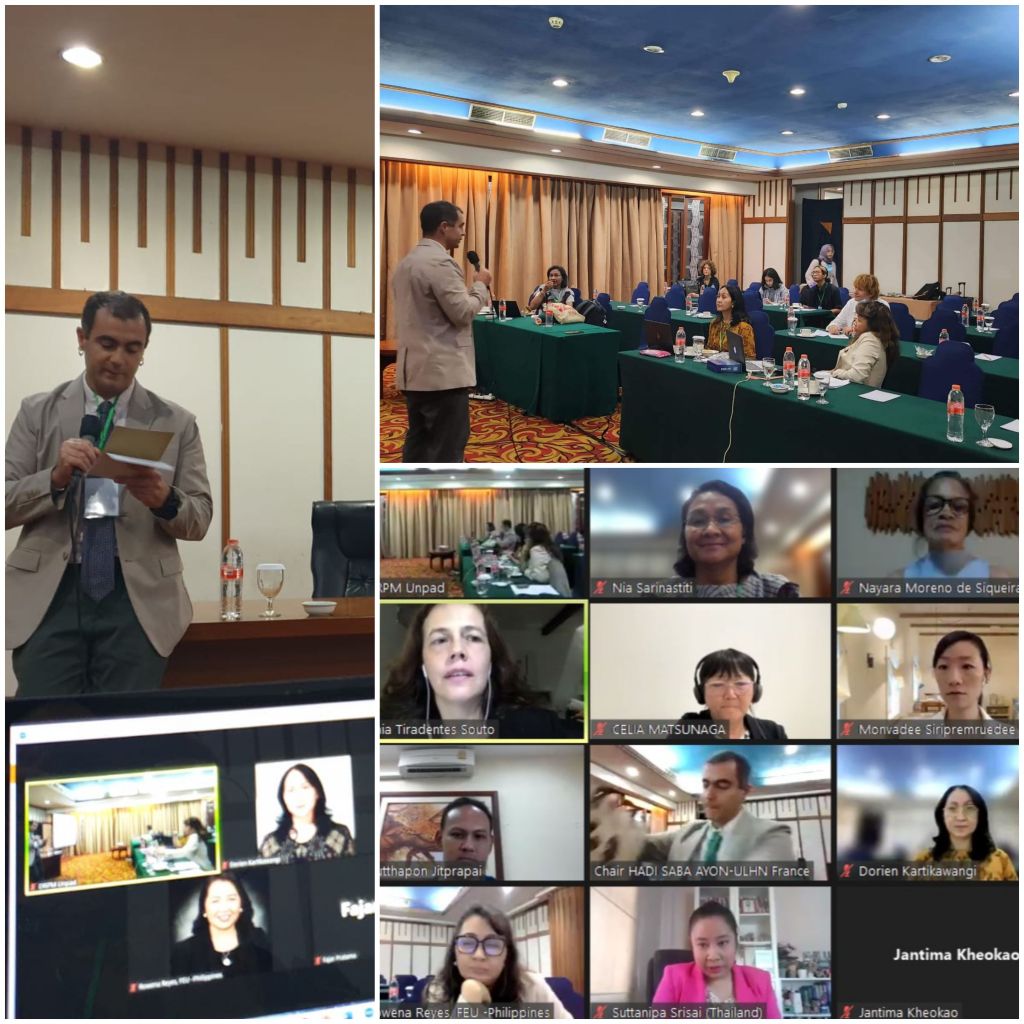
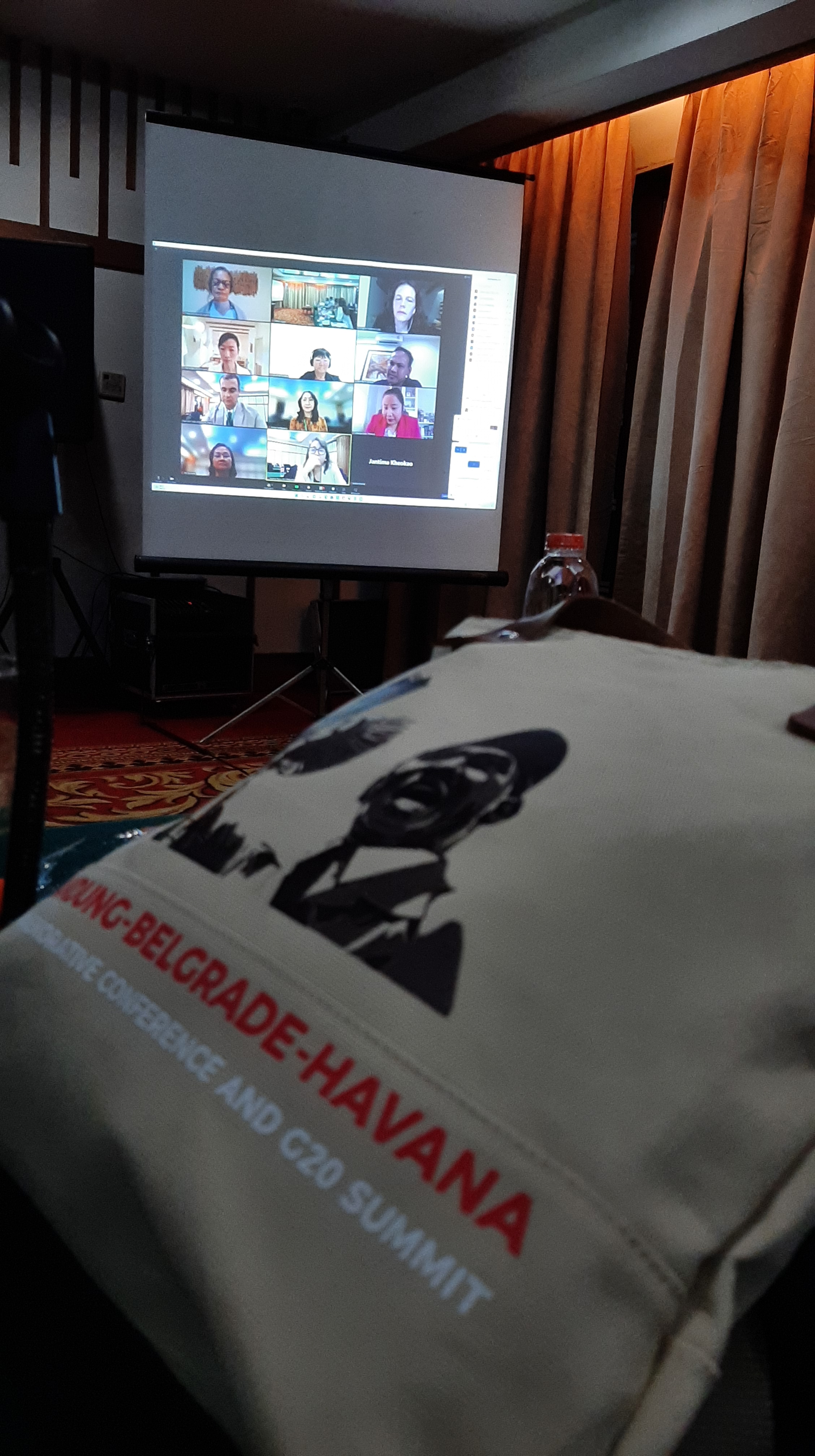
Onsite with Dorien Kartikawangi and Nia Sarinastiti (Atma Jaya-Jakarta), Rowena Capulong Reyes (FEU-Manila) in Jakarta and Bandung. Online with Jantima Kheokao and Monvadee Siripremruedee (UTCC-Bangkok), Célia Matsunaga, Nayara Moreno, and Virginia Tiradentes (Unb-Brasilia) in Bandung-Indonesia.
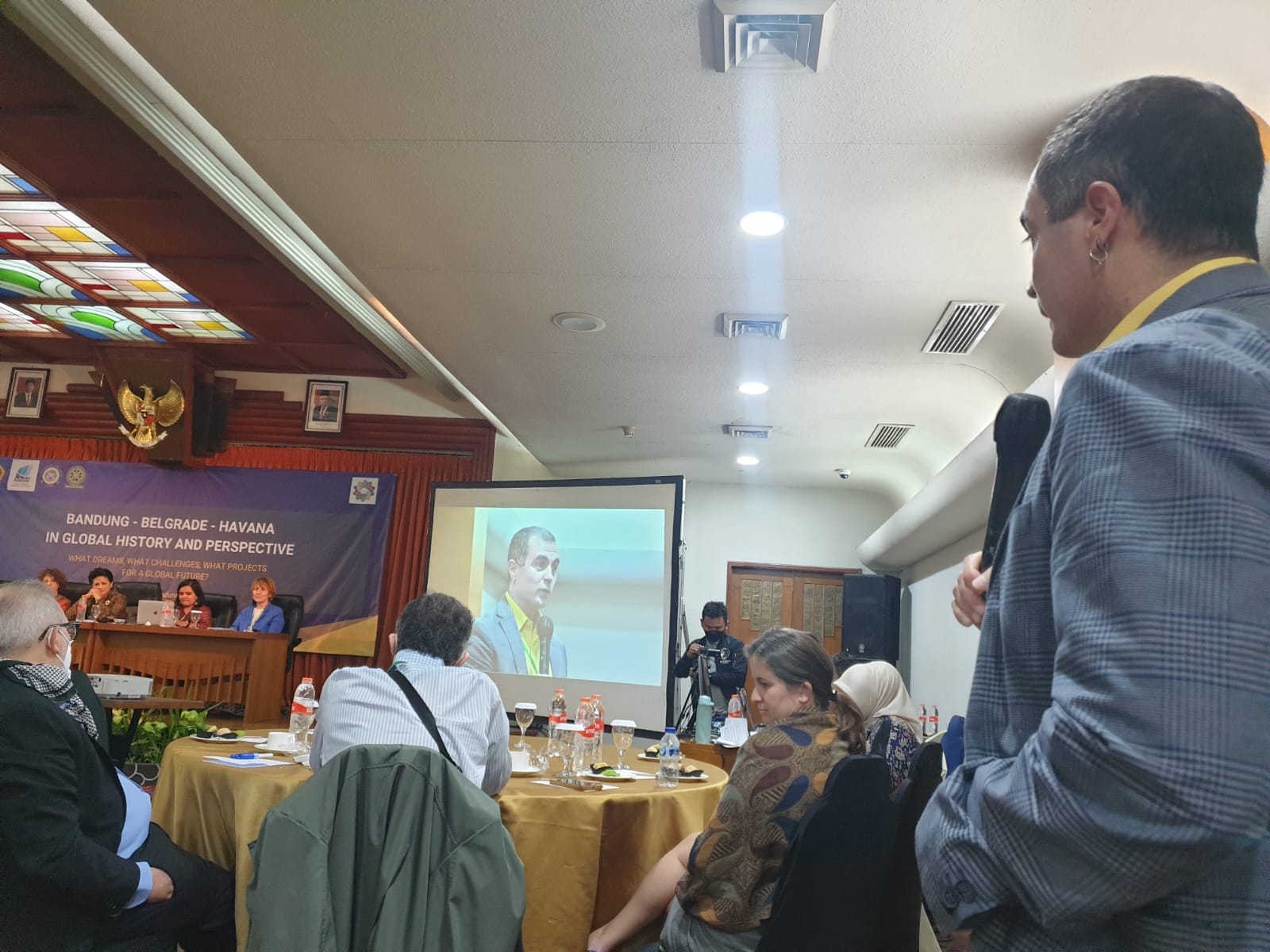
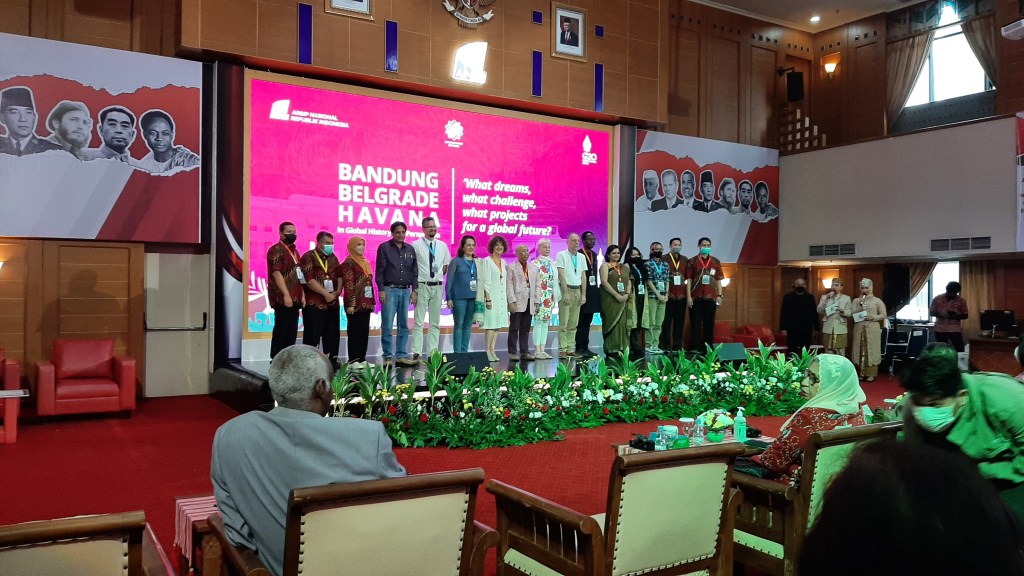
“How do we go beyond an inclusive digital city?” is the title of a round table session presented at the Bandung-Belgrade-Havana International Conference in Bandung (Indonesia) on November 09, 2022. It is a group work on digital culture and the city developed by scholars from different institutions and fields from France, Brazil, Indonesia, the Philippines and Thailand. The work presented multicultural aspects of city thought in its digital forms and inclusive models and conditions.
Digital has taken over the city, thanks to its network of infrastructures, dematerialized services (e-administration, e-commerce), and of course, uses that strongly redraw the way of living today. How does the digital culture modify the structure of the city, its space, and its living forms? How to inhabit the physical and digital environments of the city? The city does not have one definition or model. However, it has one common characteristic: gathering people in a specific place with a central authority. In his essay Two linguistic models of the city (Deux modèles linguistiques de la cité), Emile Beneviste (1974) exploits an opposition between the Roman and Greek versions of the city. In Latin, the word “civis” indicates a relationship of reciprocity and interdependence between two individuals or groups. Its correct translation is not “citizen” but “fellow citizen”. In Greek, the word “polis” defines citizens and citizenship. “Polis” specifies the rules of membership, the rights of participation in the city’s activity, and what results from it: the responsibility and privileges linked to citizenship. The differentiation between the two words, the two models, draws limits between full participation in the city and a confident presence. What about the citizens and their participation in the digital city? How to include those who do not belong to the city, transformed continuously by digital technology and reshaped in its space, architecture and role? Milad Doueihi wrote about a “new virtual urbanism” (2011) that has become our refuge and the space for our activities. It has its architecture, aesthetics, values, literature and agents. According to him, it constitutes hybrid urbanism inhabited by traces, documents, and fragments but also animated by the voice and the body, by a different temporality, or a new culture. According to Philippe Vidal (2018), digital technology creates territorial differentiation (between spaces) and social differentiation within the same space, for example, within the same city. The city’s digitalization increases the possibilities for making society more inclusive, but the “smart city” generates many obstacles and risks of exclusion for diverse individuals and populations.
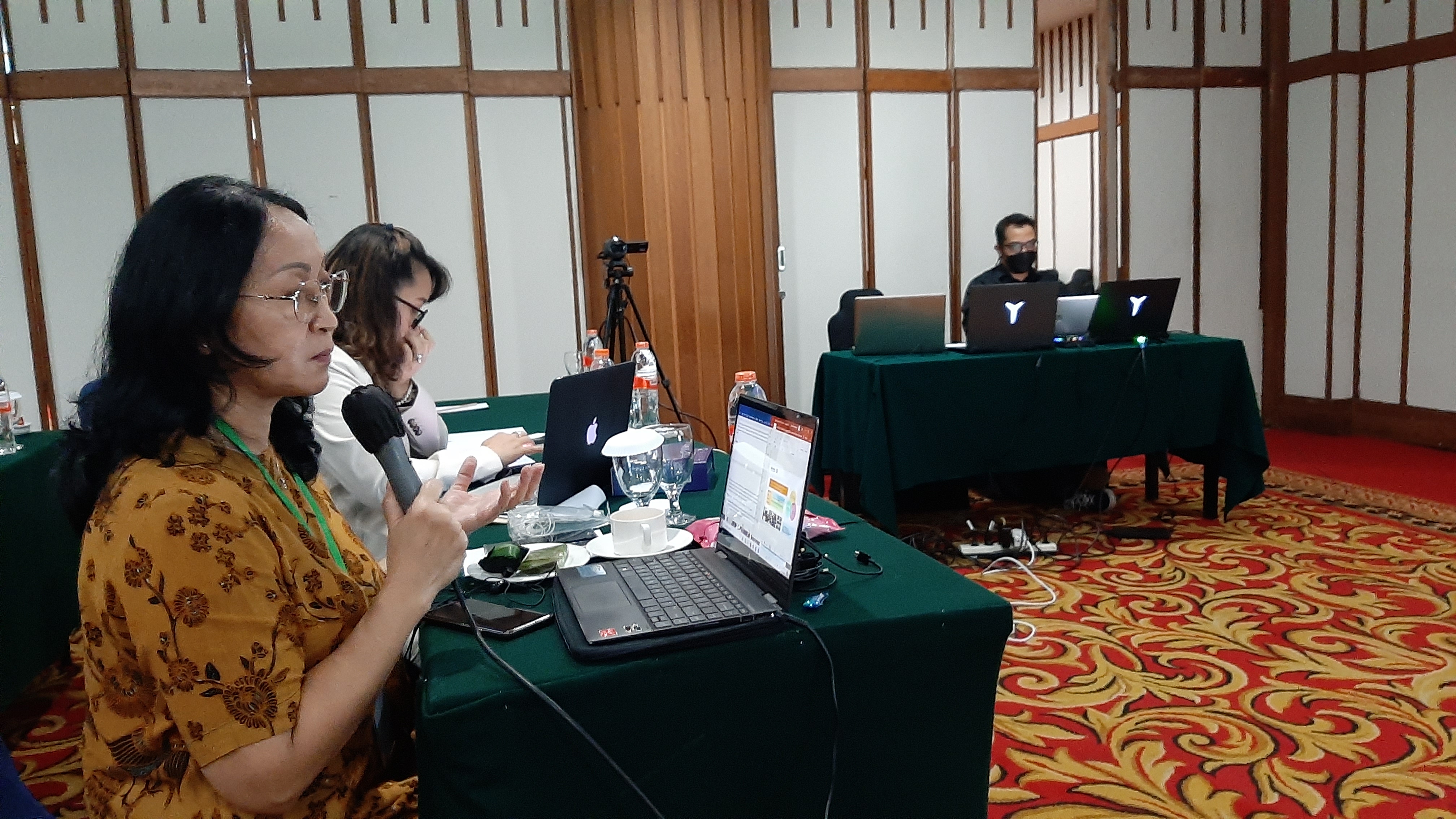
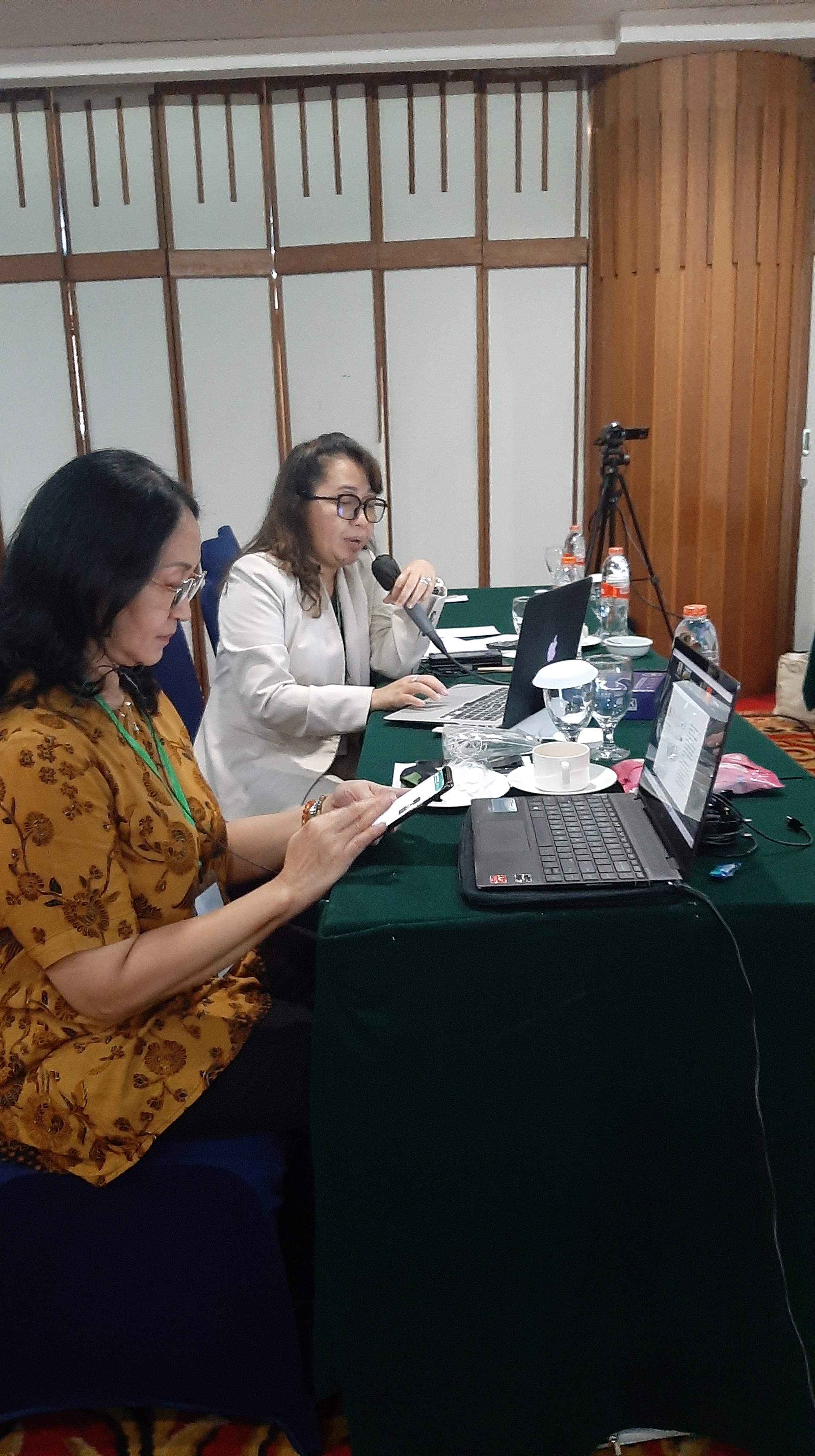
The round table onsite with Dorien Kartikawangi and Nia Sarinastiti (Atma Jaya-Jakarta), Rowena Capulong Reyes (FEU-Manila) in Bandung, and online with Jantima Kheokao and Monvadee Siripremruedee (UTCC), Célia Matsunaga, Nayara Moreno, and Virginia Tiradentes (Unb-Brasilia).
The round table, divided into two sessions, questioned how digital technology’s social and cultural uses redefine everyday life’s diverse practices. It brought two topics from Indonesia: the first addresses the need for social participation in sustainable, inclusive cities. It discusses three main interrelated: city and differences, sustainable city, and inclusive city. It talked about how digital technology creates connectivity and transforms services and culture.
The second topic questioned how can business become inclusive in the digital era and highlighted inclusive services design at the heart of a government’s mission that can help tackle complex issues and build trust with customers/citizens more effectively. It talked about inclusiveness, connecting the city with business. In addition, when an innovation mindset is six times higher in the “most-equal” cultures – workplace environments, it helps everyone attain higher positions – compared to the “least-equal”.
Another topic from the Philippines presented Manila as a smart city and discussed the digital social participation of its inhabitants. It talked about the city of Manila on Facebook, showing how users/inhabitants engage with the city and its information. It gave an example using data from October 25 to 31, 2022, showing that Tourism, Culture and Arts are the highest engagements, followed by Disaster and Risk Services. It pointed out that good governance in a digital space is also brought to the fore. It concluded with a C.I.T.Y proposal to achieve the full potential of a highly engaged digital city based on developing Consistency, Inclusivity, Training and Yield.
From Brazil, three presentations evoked the city’s artistic, commercial and educational aspects. The first deals with structuring the Brazilian handicraft management system and comprises diagnosis and strategic planning. One of the several aspects raised in this work is the need to increase the insertion and use of digital technology in the feasibility of formalizing and training artisans and marketing via e-commerce of the artefacts they produce.
The second discusses a unified virtual space for art and crafts exhibitions. It suggests a mobile application where artisans and artists can promote their work and get in touch with customers.
Moreover, as the city in the Amazon region can take the form of villages inhabited by indigenous communities, the third topic seeks to evaluate the process of indigenous Education, considering the use of technological devices. It discusses implementing an indigenous virtual library model that will assist elementary and high school students based on crafts productions of the Munduruku of Bragança indigenous group. Furthermore, a final presentation from Thailand brought to the debate a special touch: Discussing the city from the point of view of colours and talking about the Thai colour scheme that connotes Thai identity in packaging design for brand communication.
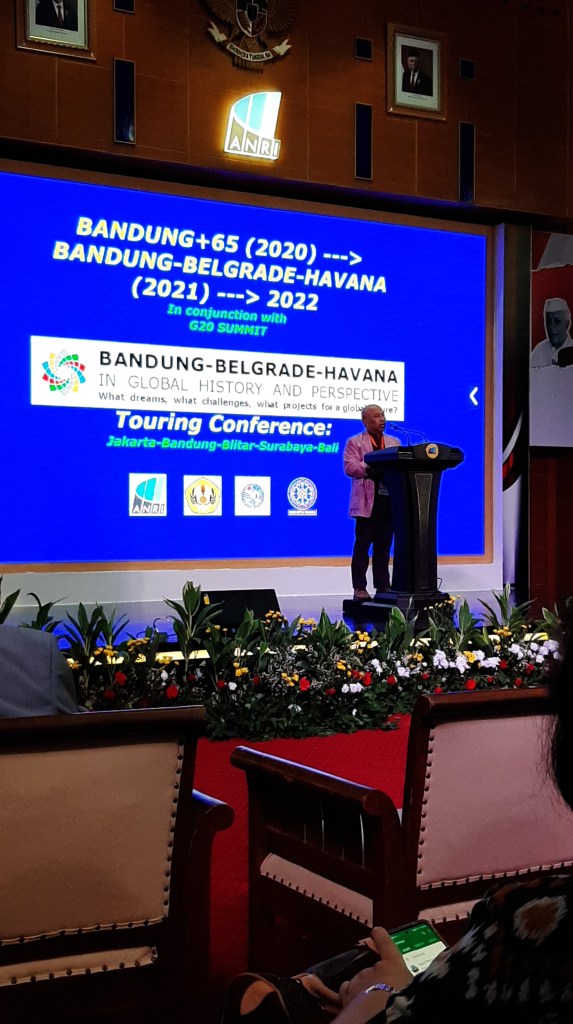
The Bandung-Belgrade-Havana International Conference is a part of the Bandung Spirit Conference Series, community-based conferences organised around the Bandung Spirit Ideals. It is conceived as a shared space based on a common concern on global issues among international scholars, activists of social movements, academic institutions and public services inspired by the Bandung Spirit. It is a collective work to formulate recommendations to be submitted to world political leaders. In addition to sharing academic works, speakers and participants are supposed to participate in elaborating the recommendations.
1) School of Communication, Atma Jaya Catholic University of Indonesia.
2) School of Communication, Atma Jaya Catholic University of Indonesia.
3) Institute of Arts and Science, Far Eastern University, the Philippines.
4) Department of Communication Arts, University of the Thai Chamber of Commerce, Thailand.
5) Monvadee Siripremruedee
6) Faculty of Communication, University of Brasilia, Brazil.
7) Department of Design, University of Brasilia, Brazil.
8) Department of Design, University of Brasilia, Brazil.
9) UMR 6266 CNRS IDÉES, Le Havre Normandy University, France.
Presentations from Indonesia, the Philippines, Brazil and Thailand on the digital and inclusive city at the BBH 2022 International Conference in Bandung-Indonesia.
In the plenary session of the BBH 2022 International Conference in Bandung: “NEFOS IS BACK!” (BRICS, NAM AND OTHER EMERGING FORCES IN A GLOBAL RESTRUCTURING”.
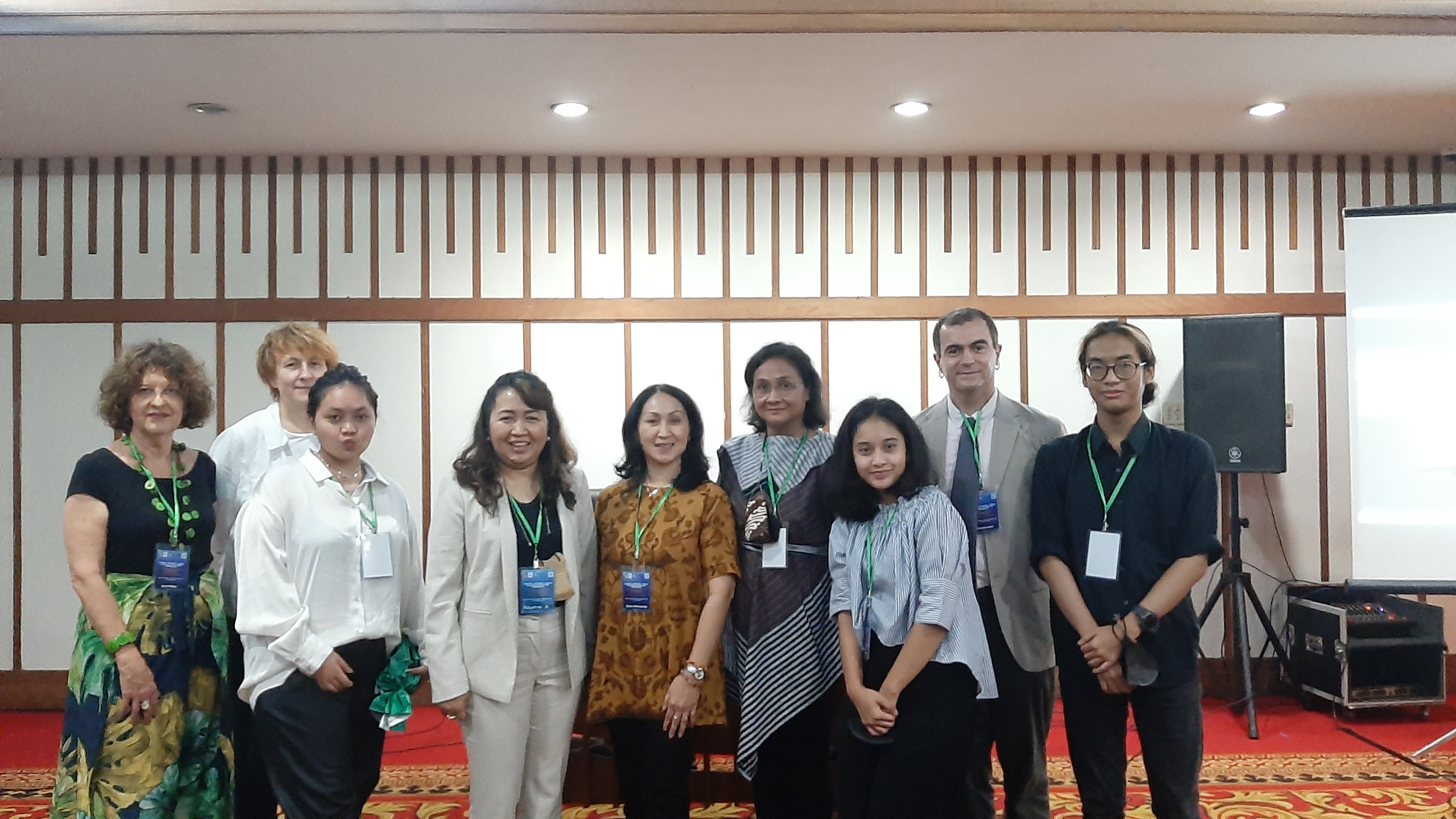
With Beatriz Bissio (Federal University of Rio de Janeiro), Marina Shilina (the Plekhanov Russian University of Economics in Moscow), Azzah Kania Budianto and Sayf Muhammad Alaydrus (Universitas Airlangga in Surabaya and Secretariat of BBH International Conference), Rowena Capulong Reyes (FEU-Manila), Dorien Kartikawangi and Nia Sarinastiti (Atma Jaya-Jakarta) Rania Nuralfath (Universitas Padjadjaran in Bandung and Secretariat of BBH International Conference).
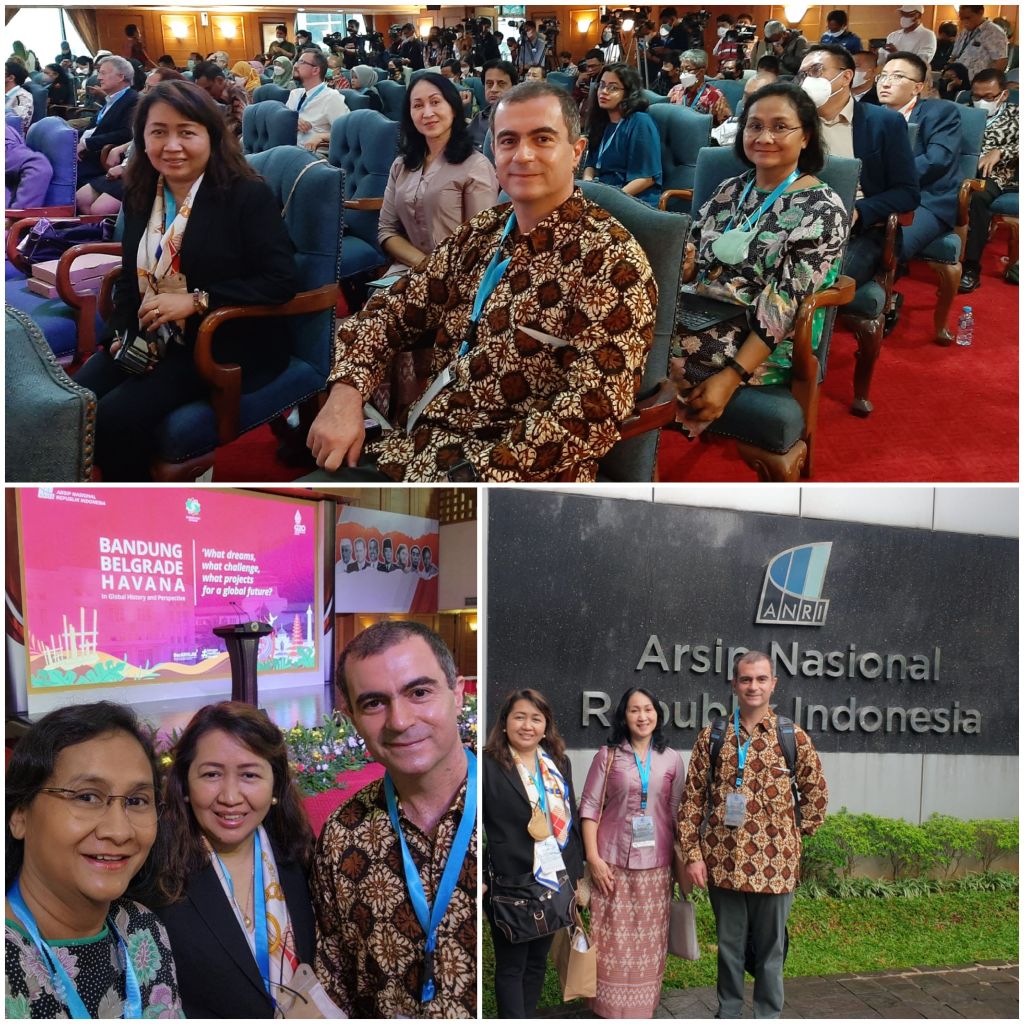
Darwis Khudori (ULHN and Coordinator of the International Organising Committee and Steering Committee) spoke at Jakarta’s BBH Conference opening session. The members of the scientific board and the Organising Committee of the Conference in Jakarta.








 Sabáeu
You must be logged in to post a comment.