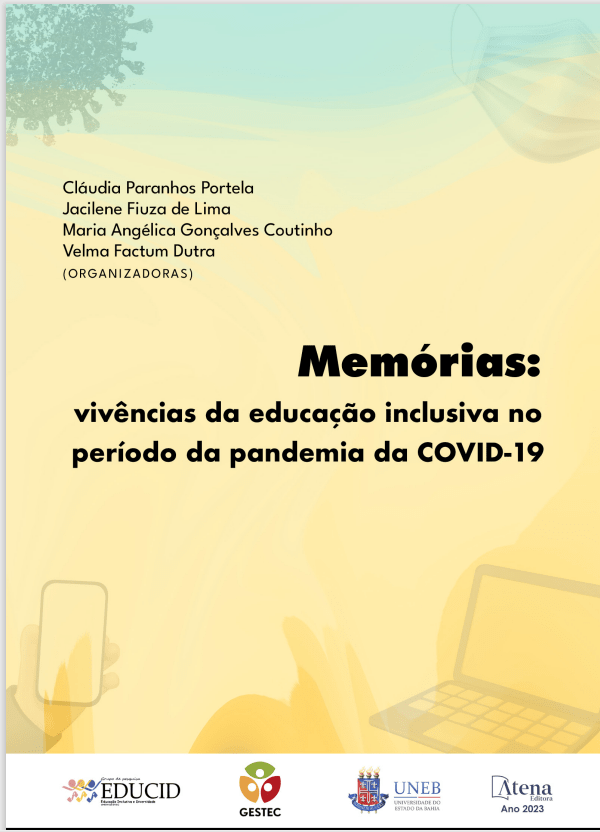
I had the pleasure to write in portuguese the Preface of the e-book Memórias: vivências da educação inclusiva no período da pandemia da Covid 19 directed by Professors Cláudia Paranhos De Jesus Portela, Jacilene Fiuza de Lima, Maria Angélica Goncalves Coutinho and Velma Factum Dutra from the University of Bahia State in Brazil (UNEB).
The preface is untitled: “RETOMAR OS RASTROS DIGITAIS PARA FAZER MEMÓRIA E FAVORECER A PARTICIPAÇÃO SOCIAL DE PESSOAS COM DEFICIÊNCIAS” (RECLAIM DIGITAL TRACES TO BUILD MEMORY AND PROMOTE THE SOCIAL PARTICIPATION OF DISABLED PEOPLE).
In the Preface I bring to the works on the culture of inclusion for disabled people a view about repossessing digital traces by building memories. I highlight on the digital traceability that characterizes our activities on the Internet. I emphasize the importance of developing digital skills and reinventing the digital space and the uses of the digital technology to help in achieving daily activities and social roles of disabled people. Finally, I call to produce and share digital cultural memories (conveying knowledge and good practices) that help to achieve life habits.
The e-book was published on October 2023 by Atena Publisher. It brings together scientific articles, letters from mothers and experience reports from various extension projects of the EDUCID research group at the University of Bahia State in Brazil, that were developed during the Covid-19 pandemic. EDUCID is the Special Education, Inclusion and Diversity Research Group linked to the Program of Management and Technology Applied to Education (GESTEC) at the State University of Bahia in Brazil.
The e-book gathers works that share theoretical and empirical experiences that transcended the home, isolation and social distancing, when collective life seemed to lose meaning and, at the same time, revealed the inexorable reason for human existence: community life.
This short online course entitled "Disability: Communication and Social participation" is delivered by Dr. Hadi Saba Ayon, at the School of Communication at Catholic University of Indonesia Atma Jaya in Jakarta. It is divided into 3 sessions/2 hours; on 22, 27, 29 of July of 2021, 15:00 - 17:00 Jakarta Time.
Good afternoon fellows and participants, and welcome to my second course on disability. I am very glad to see you in my virtual class to discuss and exchange our experiences.
Today we talk about disability and its information and communication questions: How can we understand disability situation using information and communication theories? How to deal with it in the Covid-19 pandemic context? How to define social participation for disabled people in a networked era?
In this course, we conceive disability as a variation of human development (Fougeyrollas et al., 1998, 2010, 2018); in another words, it is a difference in the level of achievement of life habits or the exercise of human rights. We approach it from a communication angle, that of constructivism, to understand the individual-environment relationship; and that of symbolic interactionism, to apprehend the individual-society relationship analyzing the social interaction and defining its context.
We talk about disability as a situation of dysfunction in the communication, defined by Gregory Bateson and Jurgen Ruesch (1951) as processes by which subjects influence each other. We approach digital culture and changes that it brought and that affect our whole society and our way of thinking and acting.
We talk about disability in exceptional times: Covid-19 pandemic. It drives us to question policies and forms of interaction concerning disabled people.
Our human society was seduced by the promises of technology of a better future, and we were taken aback by the digital. Historian Milad Doueihi described this fascination as “a new civilizing process”, borrowing the term from the German sociologist Norbert Elias. The latter defined “Civilizing Process” as a correspondence between the historical process of seizing power by a centralized state on the one hand, and the self-control exercised by individuals over their spontaneous violence, their instincts and their affects- on the other.
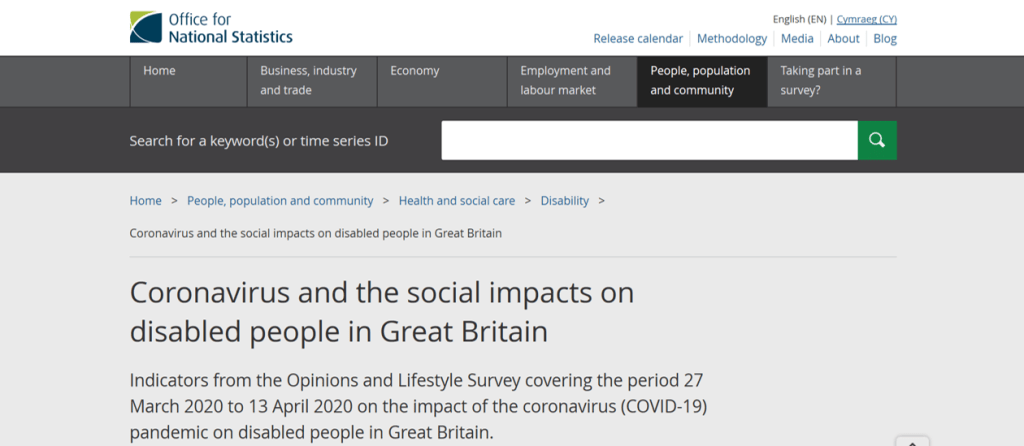
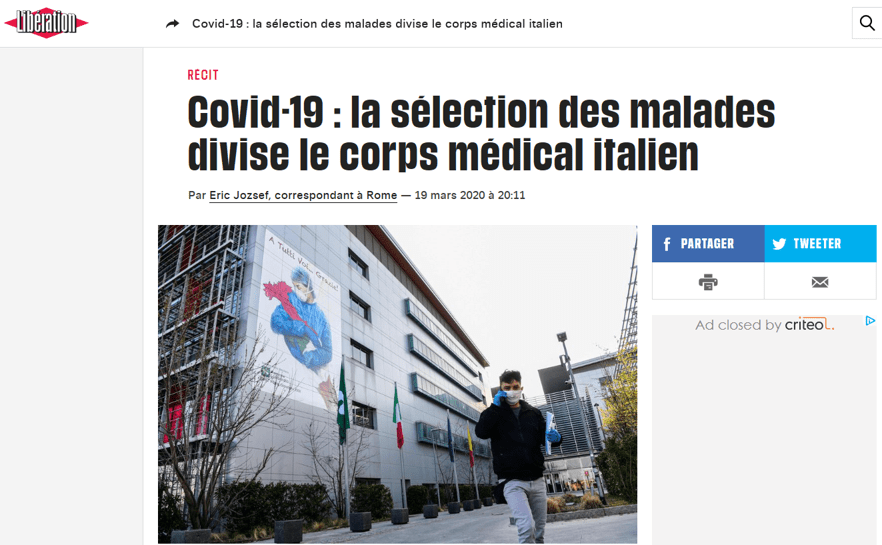
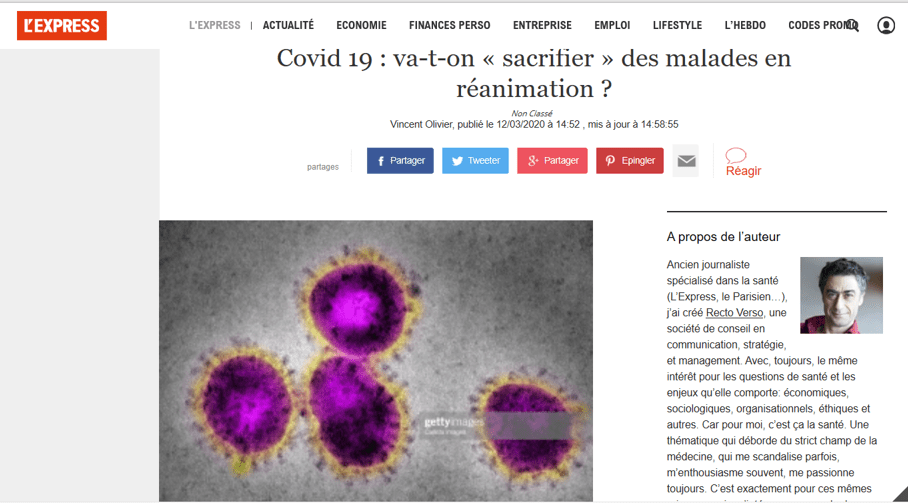
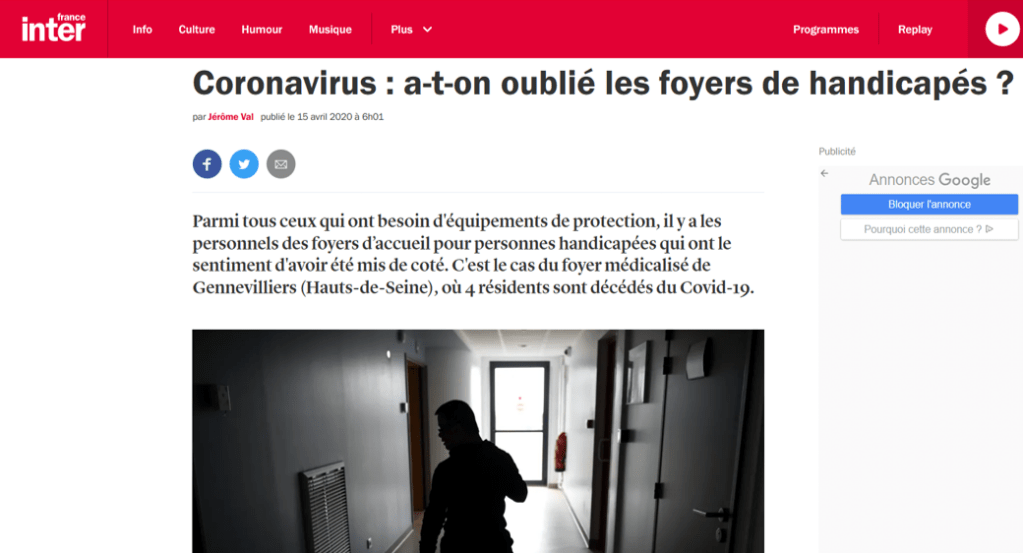
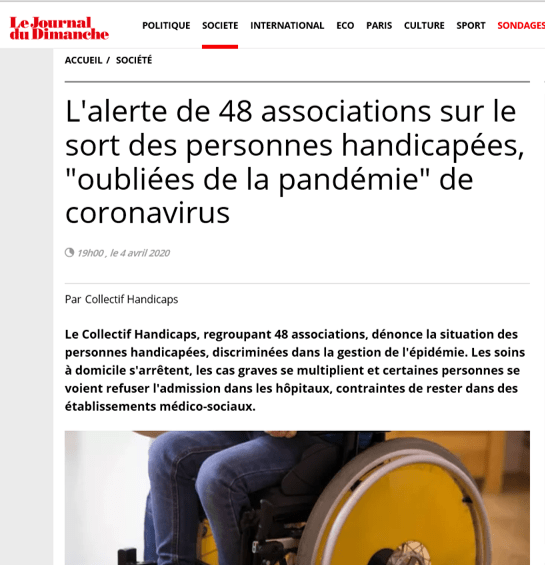
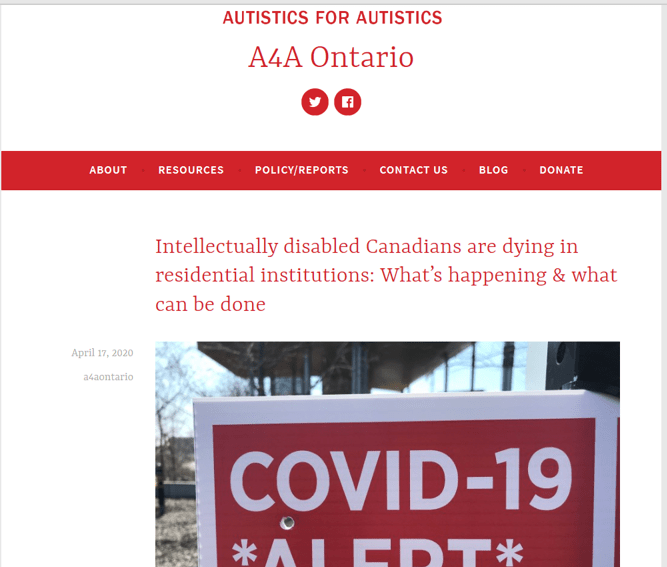
Has SARS- CoV-2 triggered a process of “uncivilization”? Do the thousands of deaths around the world; the hundreds of testimonies of families and organizations on abandoned disabled and vulnerable loved ones and the heartbreaking stories of triage of patients recreate a “humiliation processes” (Smith, 2001) against the most vulnerable, in particular those with disabilities?
Overwhelmed by their physical or functional differences throughout their life, disabled persons find themselves in the digital environment, in times of a pandemic, on equal terms with Internet users. The body is at the heart of social interaction: we live, and we build ourselves through our body. However, at present, this social (physical) interaction – is severely limited – because of Covid-19. Bodies become suspicious in public and even private spaces. They are inspected, evaluated, often sidelined, abandoned, sometimes even ousted. Sars-Cov-2, like AIDS, disrupts the relationship with others, dims the practices that build trust, and reinforces the constraints towards the contaminating agent.
The body of the disabled person, already a source of social stigma, suddenly becomes equal to other bodies. What matters (alarms) is the presence of another, at a distance far enough to be perceived as reassuring (less than 1 meter). Thus, all bodies become equal in their vulnerability to fear, sickness, and death.
During the current crisis, the digital is providing our community with leeway, thus enabling us to function. Whether it is to inform, communicate, telecommute, study, shop, or manage administrative work: more than ever, the digital proves to be an environment for social processes.
In the era where digital technology affects personal and environmental factors and everyone’s life habits, can we think the full social participation of disabled people in relation to the access? To the usage? What can we do with and in digital so that our presence is not limited to one or more identities exploited by trackers (governments, companies, individuals, and others)?
“The importance of accessibility to the physical, social, economic and cultural environment, to health and education and to information and communication, in enabling persons with disabilities to fully enjoy all human rights and fundamental freedoms”.
The access is therefore an essential condition for the exercise of human rights.
We are facing a socio-technical ecosystem where the user is the center and the brain. It is therefore essential, for the disabled person as well as for any other person, to create methods and find ways to develop social links, self-esteem, control of one’s life and time, quality of life, and to build online communities. How to think digital traces in an approach that no longer refers to an identity but to an ability to manage communication?
How to operate actively in the knowledge society? How to bring out a new “living together”?
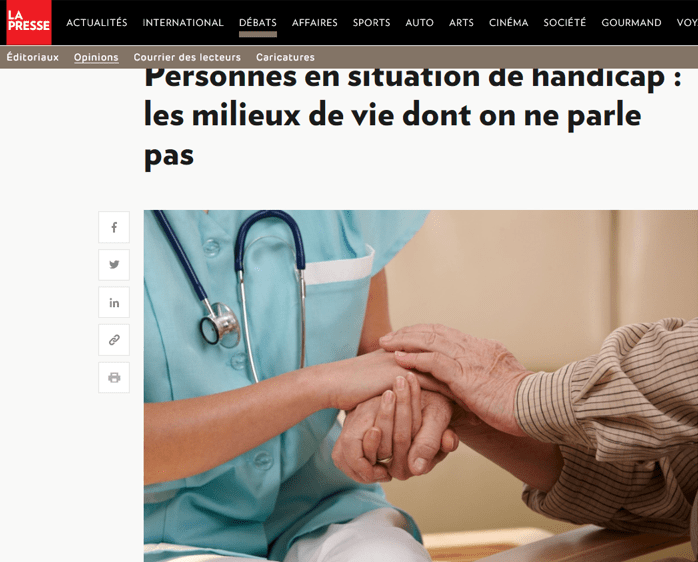
Despite the progress made in recent years, people with disabilities still face obstacles in accessing healthcare, education, employment, recreational activities or participation in political life, and also present a risk of increased poverty and social exclusion.
It includes considerations for actors: to reduce the potential exposure to Covid-19; to put a plan in place to ensure continuation of the care and support the person needs; to prepare household for the instance the person should contract Covid-19; and to ensure that all members of the household and caregivers enact the basic protection measures.
The WHO calls also governments for actions, to ensure public health information and communication is accessible; to undertake targeted measures for people with disability and their support networks; to undertake targeted measures for disability service providers in the community; to increase attention given to this population living in potentially high-risk settings of developing the disease; and to ensure that emergency measures include the needs of disabled persons.
It urges to ensure that Covid-19 health care is Accessible, Affordable and Inclusive; to deliver telehealth ; to develop and implement service continuity plans; to communicate frequently with disabled people and their support networks; to reduce potential exposure to Covid-19 during provision of disability services in the community; and to provide sufficient support for disabled people who have complex needs.
And finally, it calls for actions in institutions to reduce potential exposure to Covid-19; to prepare for Covid-19 infections in institutions; to provide sufficient support for residents with disability and to guarantee the rights for residents during the Covid-19 outbreak.
On the side of civil society, organizations defending the rights of disabled people criticized governments for not acting in favor of people with disability. For example, the League of Rights and Freedoms in Quebec in Canada, underlines in a text entitled “Defend the right to participation, crisis or not” published in a special issue of its review “Rights and Handicap” (2021), that the crisis produced by the Covid -19 was marked by a deficit of democratic mechanisms for participation and consultation of the population (in Quebec). She recalled the importance of citizen participation – especially during a pandemic – stressing the idea that action and democracy are not mutually exclusive, but complementary.
Ursula von der Leyen, President of the European Commission, called in March of this year (2021), to remove the remaining barriers for disabled people by defining flagship initiatives focused on three main themes: their rights; their independent life and autonomy and; finally, equal opportunities and non-discrimination. “We all have the right to a life without barriers. And it is our duty, as a society, to ensure the full participation of all on the basis of equality with others”, she said.
Finally, we remember that effective participation must have a significant impact on decisions, especially with regard to the most marginalized and vulnerable populations. The right to participation presupposes taking part in the public decision-making process and, consequently, having the assurance of being considered in the design, planning and implementation of policies or services that must guarantee respect for its rights.
This text, written by Doctor Hadi Saba Ayon, is the translation from French of his intervention in the web chat “The invisibility of people with disabilities in the context of Covid-19”, organized by the International Network on disability production process (RIPPH), April 29, 2020.
Could digital culture save us in the times of pandemic – and later on- in the post-pandemic era? How do we grasp our individual and collective actions in this “place of links” (Merzeau, 2013) with its inscribed traceability in a computational dimension?
Once again, we find ourselves face to face with digital technology, questioning its capacity to provide answers to our uncertainties. Could it be a “new civilizing process” (Doueihi, 2018)? Furthermore, has SARS- CoV-2 triggered a process of “uncivilization”? Do the thousands of deaths around the world[1]; the hundreds of testimonies of families and organisations on abandoned disabled and vulnerable loved ones and the heartbreaking stories of triage of patients[2] recreate a “humiliation processes” (Smith, 2001) against the most vulnerable, in particular those suffering from disabilities?
Digital culture and essential animality
Seduced by the promises of technology of a better future, we were taken aback by the digital. Historian Milad Doueihi described this fascination as “a new civilising process”, borrowing the term from the German sociologist Norbert Elias. The latter defined ” Civilising Process” as a correspondence between the historical process of seizing power by a centralised state on the one hand, and the self-control exercised by individuals over their spontaneous violence, their instincts and their affects- on the other.
Elias described humans (from European societies) of the twentieth century as “late barbarians”. The last were described by Doueihi as being “modern savages” submitted to a “digital humanism”, or:
“The result of converging complex cultural heritage with a technique that has become a place of unprecedented sociability”.
As far as Doueihi is concerned, digital technology defines as:
“A culture in the sense that it sets up a new global context, and because digital – despite a strong technical component we must always question and constantly monitor because it is the agent of an economic will – has become a civilisation distinguished by its ability to alter our vision of objects, relationships and values. The new perspectives that characterise it introduce into the field of human activity”.
All of a sudden, SARS-CoV-2 invades our world and sends us back to our fundamental animality. Stéphane Audoin-Rouzeau, a WWI historian, writes:
“We remain homo-sapiens belonging to the animal world, vulnerable to diseases against which our fighting capacities remain rustic given our supposed technological power”.
Overwhelmed by their physical or functional differences throughout their life, a disabled person finds themself in the digital environment, in times of a pandemic, on equal terms with Internet users. The body is at the heart of social interaction: we live, and we build ourselves through our body. However, at present, this social (physical) interaction – is severely limited – because of Covid-19. Bodies become suspicious in public and even private spaces. They are inspected, evaluated, often sidelined, abandoned, sometimes even ousted. Sars-Cov-2, like AIDS, disrupts the relationship with others, dims the practices that build trust, and reinforces the constraints towards the contaminating agent. For anthropologist Françoise Héritier, the solutions found by humanity for illnesses like AIDS emerged from restraint rather than the need to convince.
Such a conclusion may seem despairing because the underlying constraints are biased. However, our experience with incurable infectious diseases, shows that the societies tend to protect themselves by fleeing, or even by sidelining, abandoning, expelling or killing the contaminating agent.
The body of the disabled person, already a source of social stigma, suddenly becomes equal to other bodies. What matters (alarms) is the presence of another, at a distance far enough to be perceived as reassuring (less than 1 meter). Thus, all bodies become equal in their vulnerability to fear, sickness, and death.
During the current crisis, the digital is providing our community with leeway, thus enabling us to function. Whether it is to inform, communicate, telecommute, study, shop, or manage administrative work: more than ever, the digital proves to be an environment for social processes. Due to physical distancing, individuals are forced in their interactions to abandon or reduce their face-to-face relationships when faced with the risk of becoming infected or infecting others. The body becomes suspicious. By isolating it from the public space, we deprive it of its symbolic social interaction (as defined by George Herbert Mead), since symbolic interaction initiates a process of interpretation and definition by which some establish the meanings of the actions of others and redefine their actions.
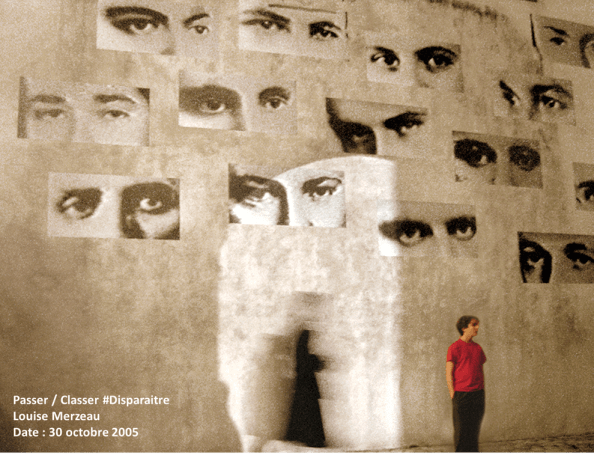
In digital environments, all interaction produces traces, mostly involuntary ones. The latter avoid all utterance and produce information on our behaviour. According to Louise Merzeau (2013), traces resist interpretations of semiology because they stem from another logic. Everything they carry is the product of processing: “computer processing of instructions, algorithmic processing of data, economic and strategic processing of databases of intentions”. Today digital businesses tend to impose marketing logic through the model of personal branding, profiling and e-reputation. “Opposing a publication function to this advertising acceptance of traces represents a major political and cultural issue” (Merzeau, 2013).
— Berkeley Center for New Media (@calnewmedia) April 20, 2020
Let us keep in mind that the Internet is an opportunity for democracy, thanks to the egalitarian foundations that presided over its birth and development (Cardon, 2010). However, user communities still struggle with access, accessibility and reappropriation of traces. How could disabled people, consequently, organise their digital habitat while guaranteeing full social participation?
“The importance of accessibility to the physical, social, economic and cultural environment, to health and education and to information and communication, in enabling persons with disabilities to fully enjoy all human rights and fundamental freedoms”.
The access is therefore an essential condition for the exercise of human rights.
By positioning the notion of access in the conceptual domain of the environment to measure its impact on social participation, Patrick Fougeyrollas and his fellows (2015), Patrick Fougeyrollas and his colleagues (2015) presented access as the intersection between six dimensions and components of the environment. The dimensions are as follows: availability; accessibility; acceptability; affordability; usability, and adaptability. So the issue is not reduced to access to the IT tool, the network provider and wired or wireless access. We are facing a phase requiring digital literacy, learning and expertise, imperative to the use of technology and the administration of content.
It points out that more than half of the participants (59%) “rarely or never used mainstream video chat (e.g., Facetime)”. The study showed that “despite experiencing obstacles to attending appointments and expressing receptivity towards telepsychiatry, participants did not have access to these services. It is important to provide education to clinicians on the potential of telepsychiatry to improve service access”.
In the era where digital technology affects personal and environmental factors and everyone’s life habits, the full social participation of disabled people should question usage rather than access. What can we do with and in digital so that our presence is not limited to one or more identities exploited by trackers (governments, companies, individuals, and others)? We are facing a socio-technical ecosystem where the user is the centre and the brain. It is therefore essential, for the disabled person as well as for any other person, to create methods and find ways to develop social links, self-esteem, control of one’s life and time, quality of life, and to build online communities. How to think digital traces in an approach that no longer refers to an identity but to an ability to manage communication?
The “Digital divide” concept implies that inclusion is the answer. The web was initially designed to work for everyone, regardless of hardware, software, language, location or ability. It means that the web should be accessible to people with various range of hearing, movement, sight and cognitive abilities..
“When websites and web tools are properly designed and coded, people with disabilities can use them”.
More specifically, people can: perceive, understand, navigate and interact with the web and contribute to it. Access to devices and the Internet, the adaptation of the workplace are not enough to accomplish network social participation. Digital is not just a technical and economic issue but contributes to the construction of a social project.
Putting their physical or functional differences aside, a disabled person can get involved in collaborative production projects to meet their (individual and collective) needs. According to Serge Proux (2014), this (collaborative) “form of contribution” refers us to a universe of modest, horizontal exchange relations between peers where contributors are engaged in:
“A universe of commonly shared normative expectations. There are shared values between contributors like freedom of expression, the logic of giving, the need for cooperation”.
Co-build memories
How to operate actively in the knowledge society? How to bring out a new “living together”? The current pandemic reminds us that we are drowning in information. The latter is everywhere, reliable and fake, archived and poorly documented, multimedia. If accessing it is easy, the process of using and turning it into knowledge is not a given. Digital has turned the concept of reception upside down. The diagram transmitter-receiver (known in Information Science) no longer applies to networked information, at least on the Internet user. The latter is no more than a receiver of information (as was the case with mass media), but he produces it, he seeks it, shares it, creates networks, participates in conversations and builds communities.
Today, we are interested in two logics among others in digital uses in a pandemic period: the first is passive, receives/consumes information, likes and shares it (especially on social networks and chat applications). The second, meanwhile, produces / co-develops information, stores it and shares it (on web pages, collaborative writing platforms, blogs.). The transition from receiving information to producing and sharing it requires thinking digital not only as a medium but also as an environment to be lived in and improved. This, in turn, calls for the development of digital skills but above all a vision of an appropriation of digital traces in “intelligent” environments, which can be used to train us, to find and understand information and to analyse situations or processes. The emerging post-pandemic world begs us to exchange, write and memorise collectively. It is in this way that disabled people, as well as all other people, appropriate their digital traces in architectural structures that allow reading and writing attached to the moment, but also extracted from other temporalities.
Do you work in a cultural & memory institution? Are you interested in using the power of digital heritage to make women more visible online? Then this brand new guide is for you! It will support you and your institution to participate in #VisibleWikiWomenhttps://t.co/n71Uqm9Mfmpic.twitter.com/8kEPk9JSkp
— @whoseknowledge@whoseknowledge.social on Mastodon (@WhoseKnowledge) April 17, 2020
— Royal Historical Society (@RoyalHistSoc) May 4, 2020
The building or co-building an “intelligent” digital environment means developing a digital memory, which can increase individual and collective power and above all, action on the environment to transform it when necessary.
– Cardon D. (2010). La Démocratie Internet, Promesses et limites, Seuil, Paris. – Doueihi M. (2018). Le numérique, un nouveau processus civilisateur. Le Monde, 24 janvier 2018, https://www.lemonde.fr/idees/article/2018/01/24/le-numerique-un-nouveau-processus-civilisateur_5246335_3232.html – Doueihi M. (2011). Pour un humanisme numérique, Seuil, Paris. – Fougeyrollas P., Boucher N., Fiset D., Grenier Y., Noreau L., Philibert M., Gascon H., Morales E., Charrier F. (2015). Handicap, environnement, participation sociale et droits humains : du concept d’accès à sa mesure. Revue Développement humain et changement social, avril 2015, p. 5-28. – Lal Sh., Abdel-Baki A., Sujanani S., Bourbeau F., Sahed I., Whitehead J. (2020). Perspectives of Young Adults on Receiving Telepsychiatry Services in an Urban Early Intervention Program for First-Episode Psychosis: A Cross-Sectional, Descriptive Survey Study. Frontiers Psychiatry, 11:117, doi: 10.3389/fpsyt.2020.00117 – Lepalec A., Luxereau A., Marzouk Y. (1997). Entretien avec Françoise Héritier. Journal des anthropologues, n° 68-69, p. 21-33. – Merzeau L. (2013). L’intelligence des traces. Intellectica, vol. 1, n° 59, p. 115-135. – Newton T. (2008). (Norbert) Elias and Organization: Preface. Organization, 8(3), p. 459-465. – Paillé S. (2017). La sociologie de Norbert Elias et « l’effondrement de la civilisation » en Allemagne. Cycles Sociologiques, vol. 1, n° 1, https://cycles-sociologiques.com/publications__trashed/sabrina-paille-la-sociologie-de-norbert-elias-et-leffondrement-de-la-civilisation-en-allemagne/ – Proulx S. (2014). Enjeux et paradoxes d’une économie de la contribution, dans La contribution en ligne : pratiques participatives à l’ère du capitalisme informationnel, Presse de l’Université du Québec, Québec. – Smith D. (2001). Organizations and Humiliation: Looking beyond Elias. Organization, vol. 8, n° 3, p. 537-560.


 Sabáeu
You must be logged in to post a comment.